Wedding Officiant Outfit Female: The Complete Style Guide
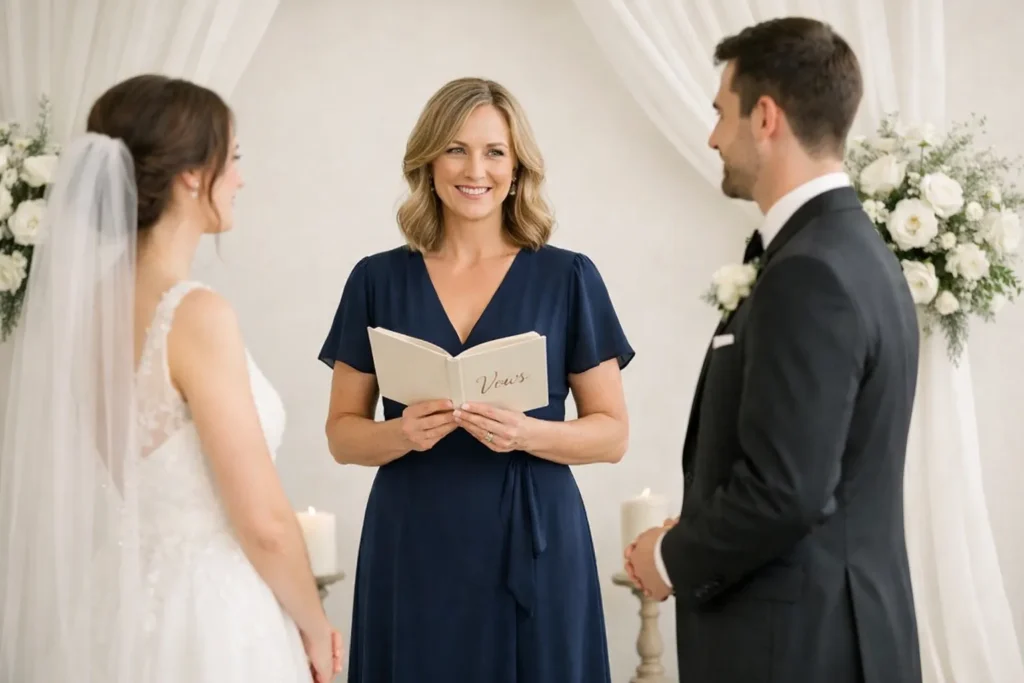
Being asked to officiate a wedding is a huge honor, and I quickly realized that choosing the right outfit is just as important as preparing my script. I need to look polished, feel comfortable, and respect the couple’s vision while staying in the background of their most memorable photos. In this guide, I share how I choose outfits for officiating, covering styles, colors, seasonal tips, accessories, shoes, and practical details like pockets and vow books. My goal is to give real-world advice that helps me feel confident and professional at the altar.
The Role of Your Outfit at the Altar
When I stand at the altar, my outfit becomes part of the ceremony’s visual story. I frame the couple in every photo, so I make sure my clothing blends into the overall aesthetic. Even subtle distractions can pull attention away from the couple, so I focus on neutral, elegant colors and classic silhouettes that support the ceremony rather than steal the spotlight.
Framing the Couple
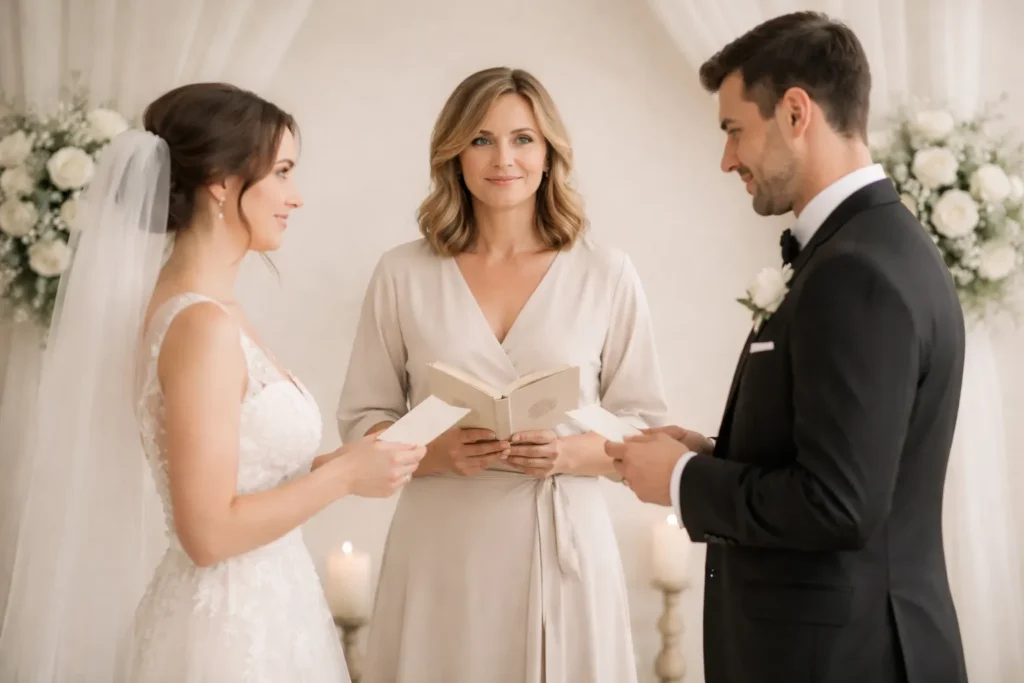
During the ceremony, all eyes are on the couple, and my outfit appears in almost every photo. Bright colors or bold patterns can shift focus, so I stick to muted, neutral shades. Solid tones consistently help the couple remain the central point of attention, and I’ve found this works in real weddings across various settings.
Projecting Authority and Warmth
I aim to balance authority and approachability. I’m leading the ceremony, so my outfit needs to communicate professionalism, but it also needs to feel warm and welcoming. Choosing clothing that is formal yet comfortable helps me convey both confidence and kindness to the couple and their guests.
The Golden Rules for Choosing an Officiant Outfit
Before picking anything, I follow a few simple rules to make the process stress-free and ensure the couple is happy with my look. These rules come from experience and help avoid last-minute wardrobe issues while honoring the wedding’s style.
Always Consult the Couple First
I never assume I know what the couple wants. I ask about dress code, color palette, and whether they prefer a dress or suit. Clear communication early on prevents 90% of outfit issues and ensures I align with their vision.
Prioritize Absolute Comfort
Standing for 20 to 40 minutes can be tiring. I select breathable fabrics, avoid tight waistbands, and make sure I can move freely. Comfort directly impacts how confidently I can deliver the ceremony.
Mind the Microphone
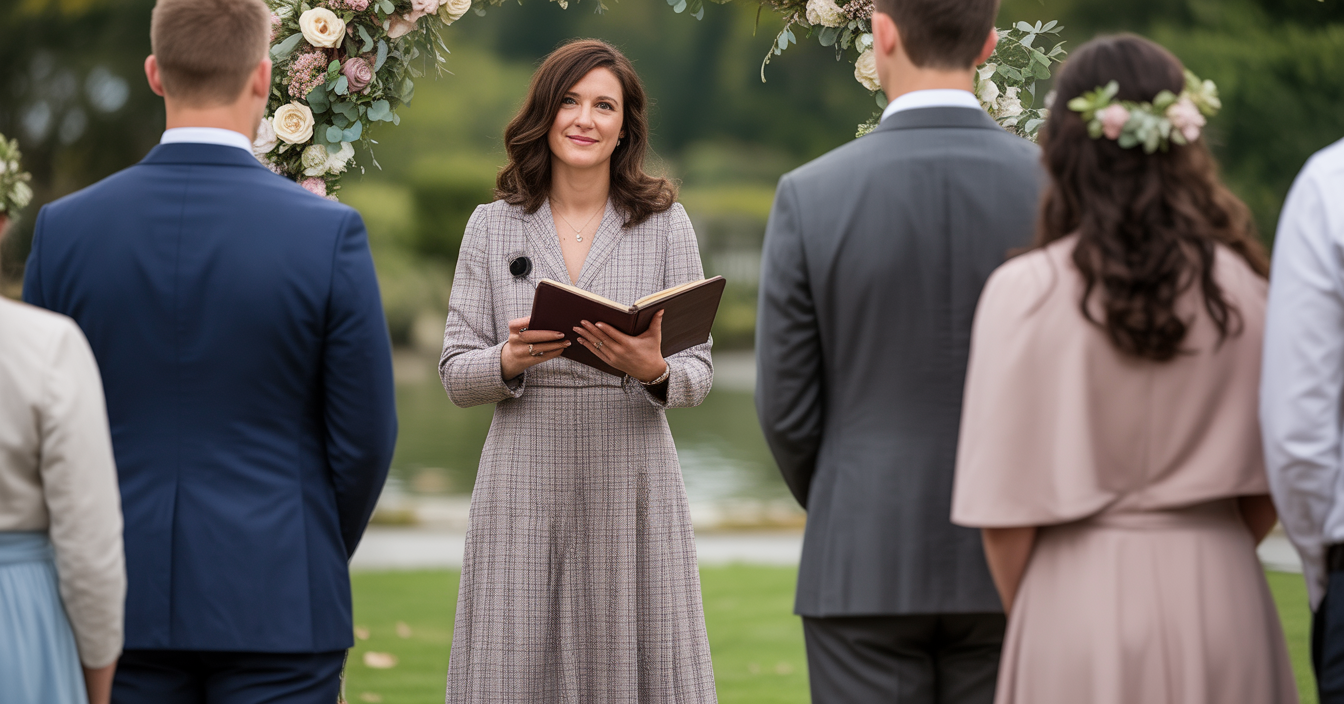
Most weddings use microphones now, so I pick outfits with structured necklines or lapels to support clip-on mics. Soft fabrics can sag and fail to hold battery packs properly. Attention to these details ensures the ceremony runs smoothly and looks neat in photos.
Outfit Styles and Silhouettes That Always Work
I’ve tried many outfit styles, and a few silhouettes consistently look polished and appropriate. My choices depend on the venue, season, and couple’s style. These options balance formality, comfort, and photogenic appeal.
The Classic Tailored Suit
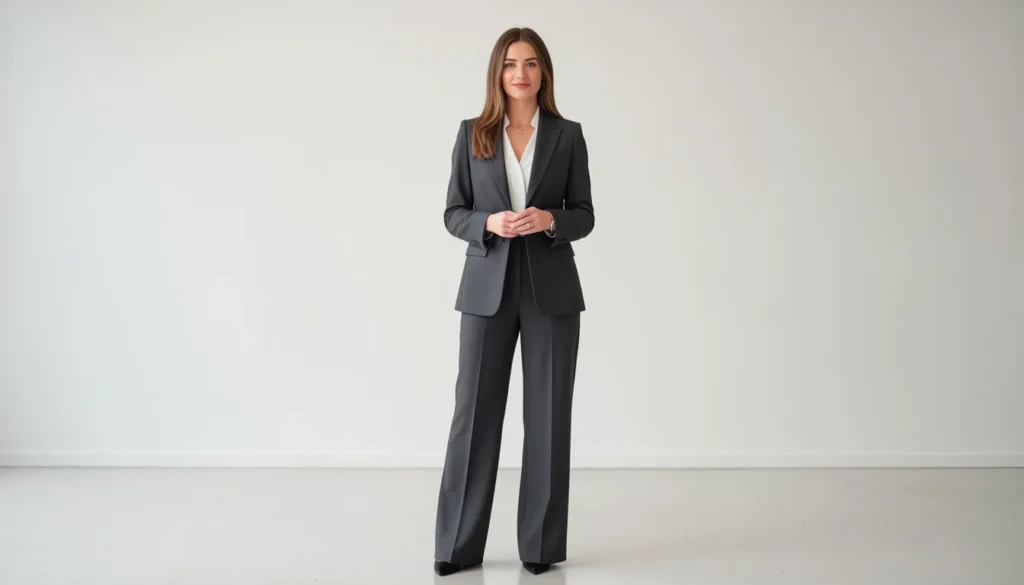
A tailored pantsuit gives a sharp, modern, and professional appearance. I make sure the blazer fits well at the shoulders and the trousers have a clean hem. Suits provide structure for mics and functional pockets for tissues or vow cards. Neutral tones like navy or charcoal maintain elegance without drawing attention.
The Elegant Midi Dress
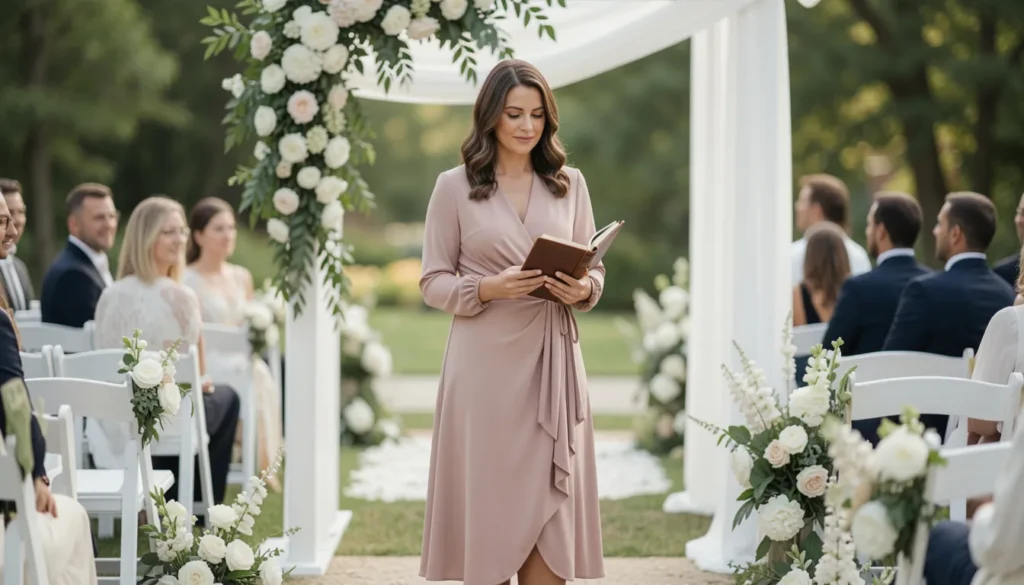
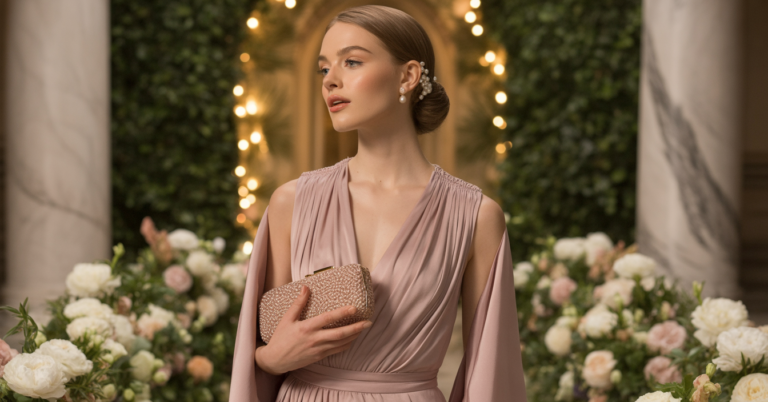
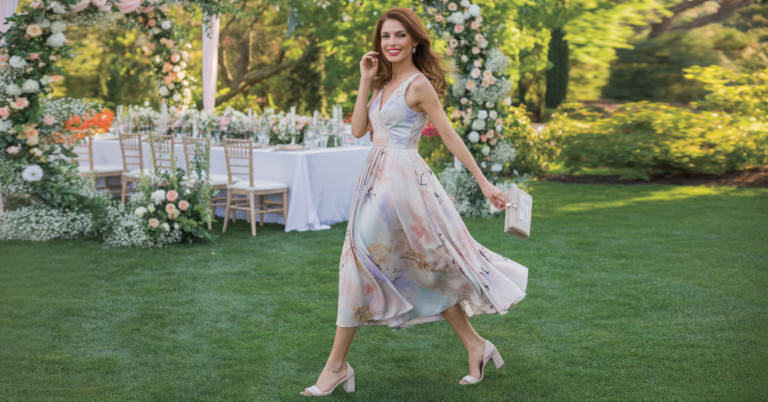
A midi dress is my most reliable option. A hemline below the knee looks professional and allows movement. Wrap, sheath, or A-line styles define the waist without restricting mobility. Sleeve length varies by season, and I often pair sleeveless dresses with a blazer or shawl for flexibility.
The Sophisticated Jumpsuit
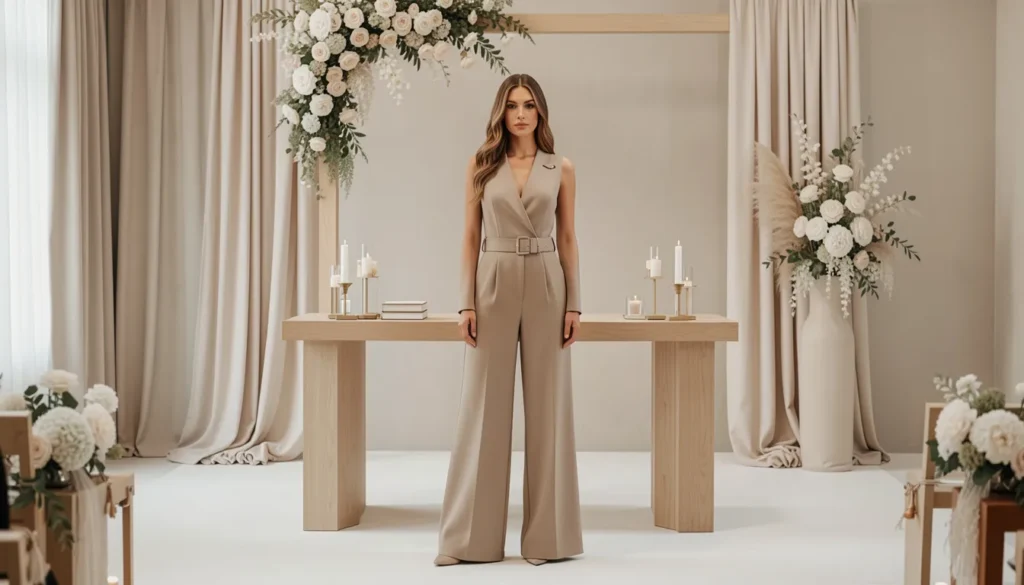
A jumpsuit is a modern alternative to dresses or suits. I choose wide-leg styles with a defined waist in structured fabrics like crepe or wool. Modest necklines keep the look formal, and the outfit can be accessorized easily for seasonal or themed weddings.
Colors and Patterns: What to Wear and What to Avoid
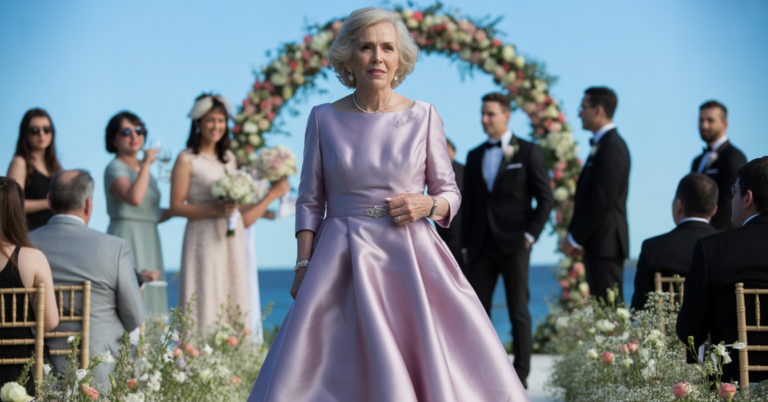
Color choice is critical for photographs and overall ceremony aesthetics. I stick to neutral, muted, or deep jewel tones that complement the wedding palette. I avoid white, ivory, bright red, neon shades, and matching bridesmaids exactly unless requested. Subtle patterns are okay, but solid colors are safest as busy prints distort on camera.
The Best Colors for an Officiant
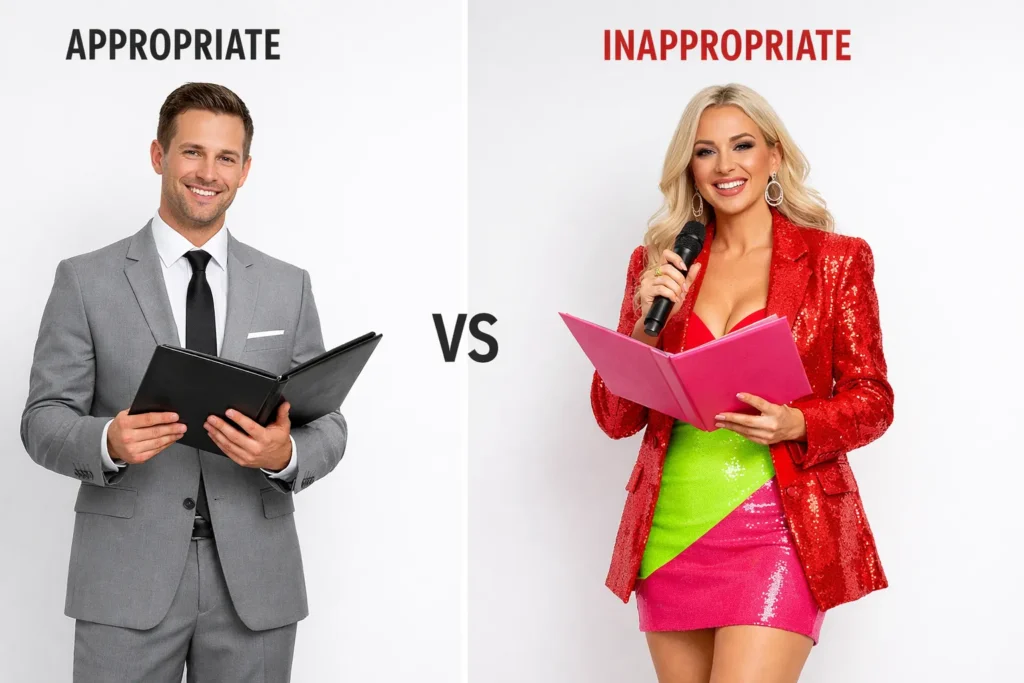
Neutral shades like navy, charcoal, taupe, and mushroom photograph beautifully. Deep jewel tones like emerald, burgundy, or plum are perfect for fall and winter weddings. These colors recede into the background while keeping the look polished and elegant.
Colors You Should Generally Avoid
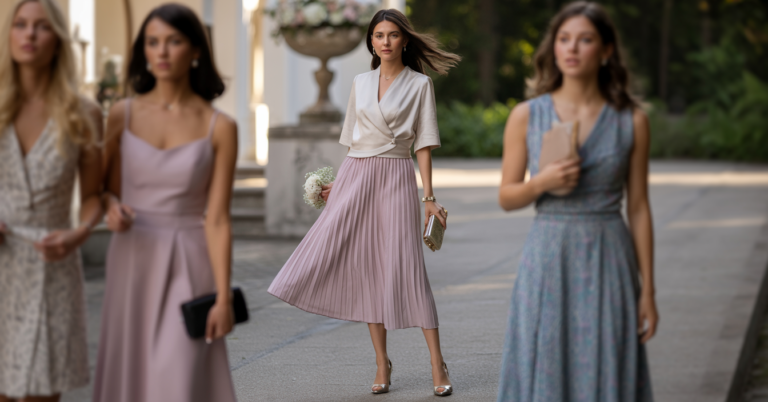
I avoid white, ivory, or champagne to not compete with the bride. Bright red and neon colors draw attention away from the ceremony. Matching bridesmaids exactly can make me blend in with their group, so I focus on complementary shades instead.
Navigating Patterns
I generally avoid busy patterns because they don’t translate well in photos. If I wear a print, it’s subtle and tonal, reading as a solid color from a distance. This ensures elegance while keeping the couple as the visual focus.
Seasonal Style Guide for Female Officiants
Weather affects what I wear. Spring calls for lighter fabrics and soft colors with a blazer. Summer needs breathable cotton or linen and loose silhouettes. Fall allows rich colors and mid-weight fabrics. Winter requires thicker fabrics like velvet or wool, and sometimes structured outerwear for outdoor portions.
Spring Ceremonies
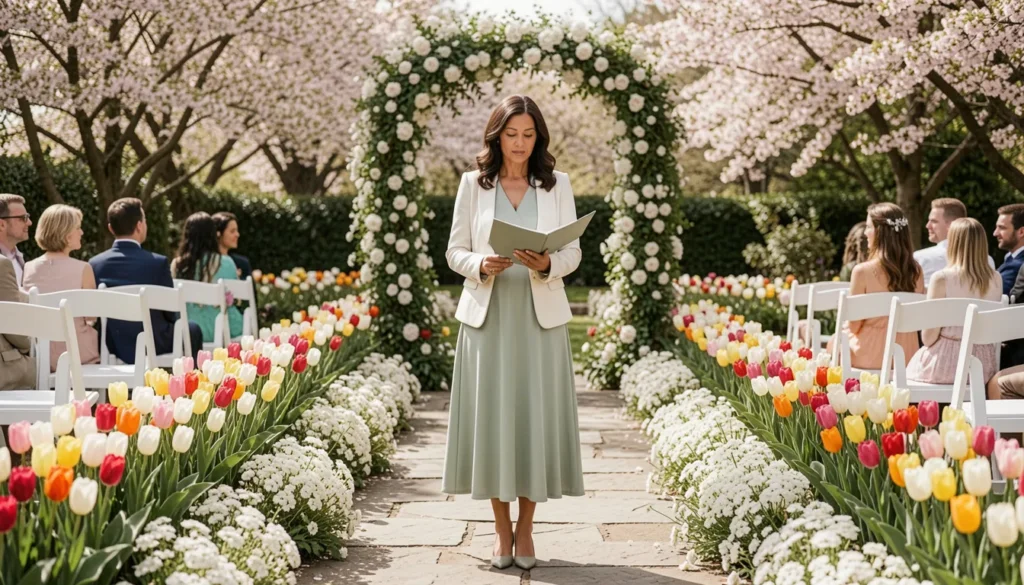
Spring weather can be unpredictable, so I layer with a tailored blazer or cardigan. Light fabrics like chiffon or silk blends keep me comfortable throughout fluctuating temperatures.
Summer Weddings
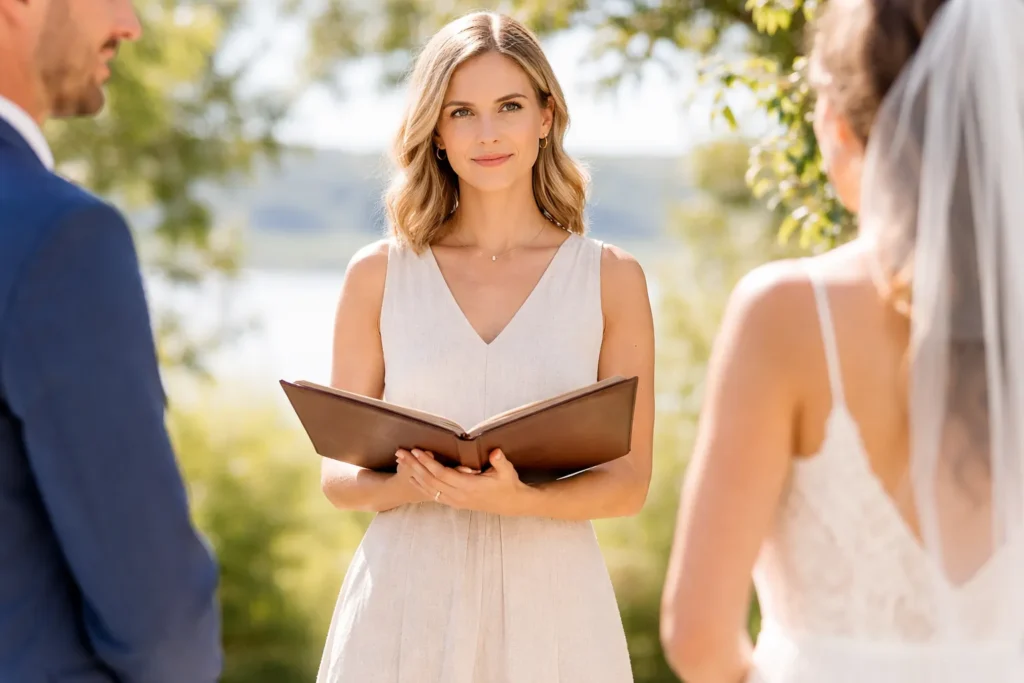
Summer ceremonies can get very hot, especially outdoors. I select breathable fabrics, loose silhouettes, and cap sleeves for sun protection. Lightweight outfits prevent sweat marks and let me focus on the ceremony.
Fall Nuptials
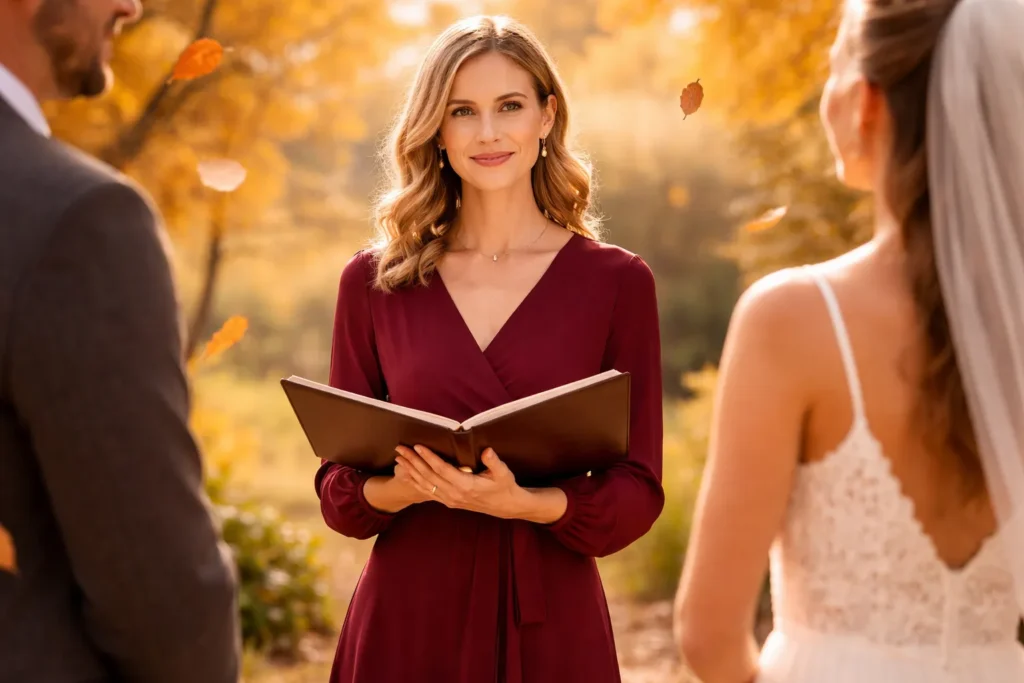
Fall allows deep jewel tones and mid-weight fabrics. Closed-toe pumps or ankle boots replace sandals for comfort and elegance, matching the season’s natural backdrop.
Winter Celebrations
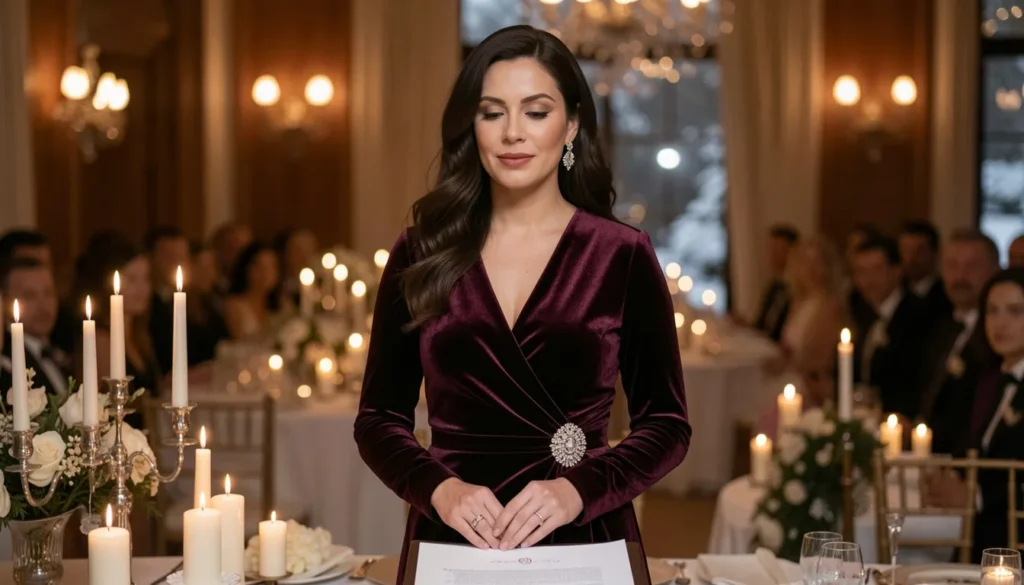
Winter weddings are mostly indoors, but I prioritize warmth and style. Velvet or thick wool fabrics work well, and I wear a structured coat for any outdoor parts while maintaining a formal, polished look.
Footwear and Accessories for the Female Officiant
Shoes and accessories complete the outfit. I wear stable block heels, wedges, or flats because I often stand for long periods. Jewelry is minimal to avoid distractions or microphone interference. A professional binder or vow book acts as both functional and stylish accessory. Pockets are essential for tissues or mints, and I make alternative arrangements if needed.
Functional Yet Stylish Shoes
I prioritize stability and comfort. Shoes must provide support and remain elegant. Breaking in new shoes is critical to prevent blisters, especially on grass, sand, or uneven terrain.
Minimalist Jewelry
I keep jewelry simple—studs, delicate pendants, or a classic watch—to add polish without interfering with microphones or drawing attention.
The Ultimate Accessory: The Vow Book or Binder
A polished vow book or binder completes my outfit. Choosing one that matches or complements my outfit elevates my professional appearance and ensures notes are neatly organized.
Functional Additions (Pockets)
Pockets are extremely useful for tissues, mints, or small notes. If my outfit lacks them, I plan ahead by asking a guest or planner to hold essential items discreetly.
What to Do When the Dress Code is Unconventional
Not all weddings are traditional. I adapt my outfit while maintaining authority. Black-tie events call for a formal gown or tuxedo. Casual backyard weddings allow sundresses or linen jumpsuits. Themed weddings may include subtle nods to the concept, but I avoid full costumes unless requested.
Black-Tie and Highly Formal Weddings
I elevate my look with a floor-length gown or female tuxedo in dark, solid colors. The outfit should match the formal setting and complement the wedding aesthetic.
Ultra-Casual or Backyard Ceremonies
For casual weddings, I select lightweight, breathable fabrics. Outfits remain polished if wrinkle-free and well-tailored, paired with comfortable wedges or flats.
Themed Weddings
For themed weddings, I add subtle touches that honor the concept without compromising professionalism. Rustic weddings might inspire lace or suede boots. I avoid full costumes unless the couple explicitly requests it.
Conclusion
From my experience, picking the right officiant outfit is straightforward if I focus on comfort, practicality, and the couple’s preferences. Classic styles, neutral or muted colors, structured garments, stable shoes, and a professional binder make me confident and ready to focus on delivering a heartfelt ceremony while letting the couple shine.
Frequently Asked Questions (FAQs)
1. Can a female wedding officiant wear black?
Yes, black is elegant, slimming, and appropriate for almost any ceremony. For daytime or outdoor weddings, I sometimes choose softer dark neutrals like navy or charcoal.
2. Should the officiant match the bridesmaids?
No, I coordinate complementary colors rather than match exactly. This keeps me professional while respecting the bridal party.
3. Is it appropriate for a female officiant to wear a pantsuit?
Absolutely, pantsuits are professional, allow easy movement, and provide structure for microphones and pockets. Neutral tones work best.
4. Can I wear a floral dress to officiate a wedding?
Yes, but I keep patterns subtle and always confirm with the couple first. Loud or bright prints are avoided.