The Dream Begins: Choosing the Perfect Bridal Gowns
The search for the perfect wedding dress is one of the most exciting parts of planning a wedding. Many brides dream about this moment for years. With so many styles, fabrics, and designers, the world of bridal gowns can feel both magical and overwhelming. This is the dress that will appear in photos and memories for a lifetime, so it is important to find a gown that makes you feel beautiful, confident, and true to yourself.
This guide is designed to help you understand everything about wedding dresses. It will explain different silhouettes, necklines, fabrics, and tips for shopping, helping you find the dress of your dreams.
Understanding the Anatomy of a Wedding Dress
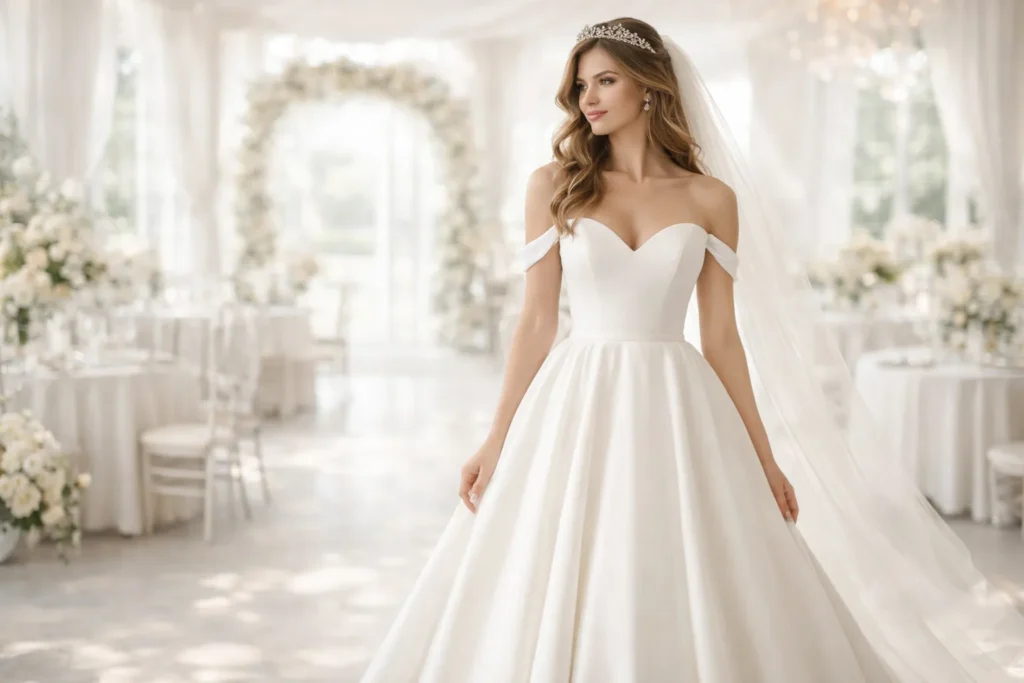
Before visiting a bridal boutique, it is useful to know the basic parts of a wedding dress. Understanding these terms will help you explain your preferences to your consultant.
- Silhouette: The overall shape of the gown.
- Neckline: The shape of the fabric around the neck and shoulders.
- Waistline: The point where the skirt begins.
- Sleeve Style: The length and design of the sleeves.
- Train: Extra fabric that extends from the back of the dress and trails on the floor.
Finding Your Perfect Silhouette
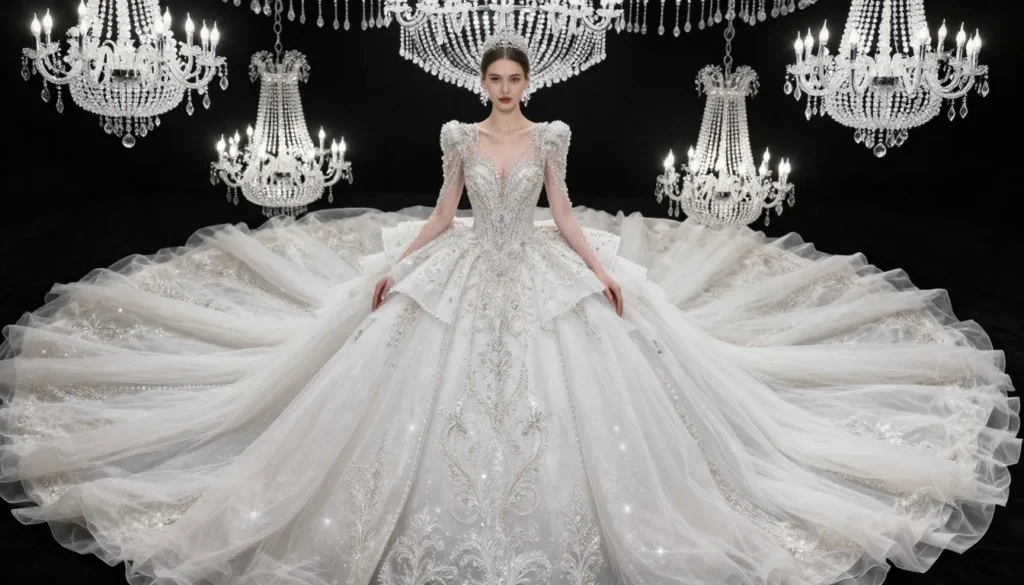
The silhouette is the foundation of your wedding day look. It should flatter your body type and reflect your personal style.
The A-Line Gown
The A-line gown is fitted at the bodice and gradually flares out from the waist, forming an “A” shape. It is flattering for nearly all body types. It can hide wider hips and create curves on a slender frame. This shape is classic, romantic, and versatile for both formal and casual weddings.
The Ball Gown
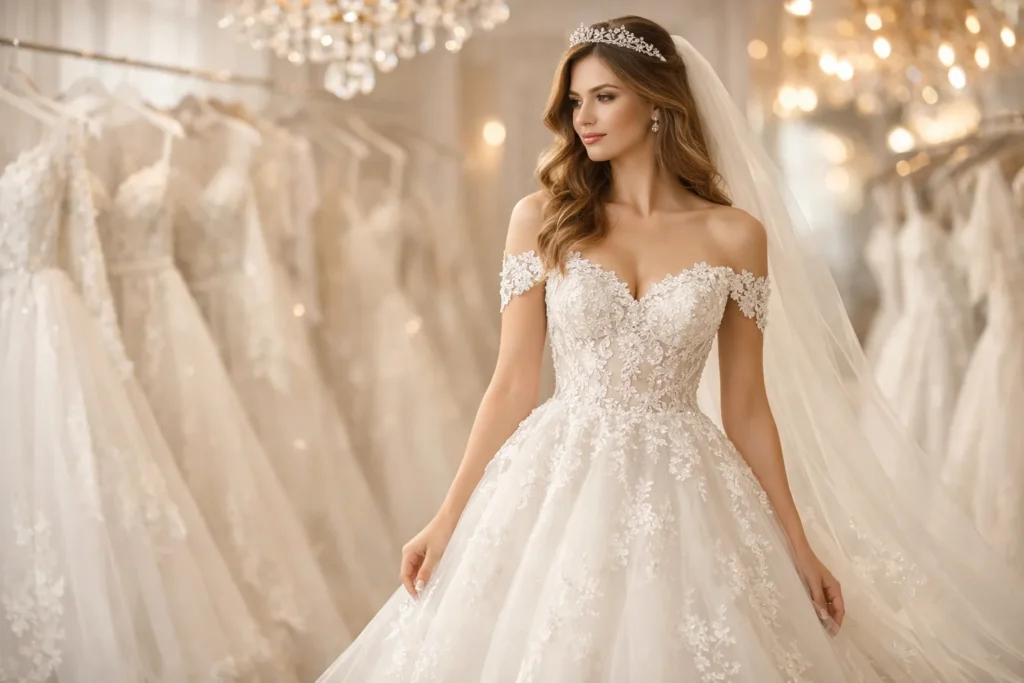
Ball gowns have a fitted bodice and a full, dramatic skirt. They are best for slender or pear-shaped figures because the skirt accentuates the waist and hides the lower body. This style creates a traditional, grand, princess-like look, perfect for formal or black-tie weddings.
The Mermaid Gown
The mermaid gown is fitted from the chest to the knee and then flares out dramatically. It is ideal for hourglass figures and shows off curves. This style is glamorous, sexy, and modern but can be restrictive for dancing.
The Trumpet Gown
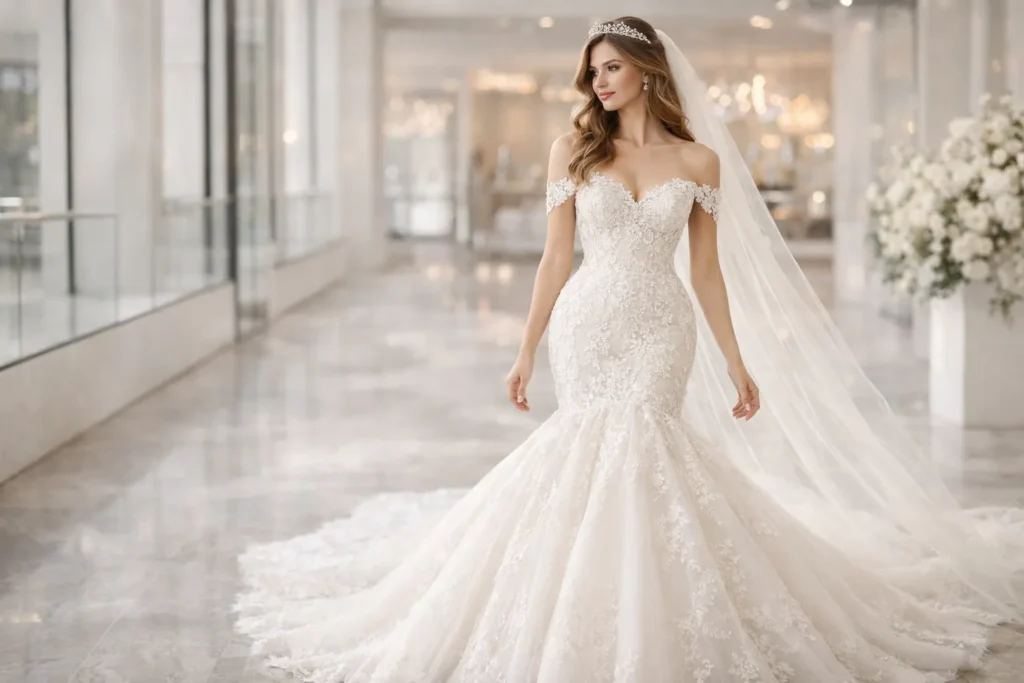
The trumpet gown is similar to the mermaid but flares out mid-thigh, giving more comfort and mobility. It is perfect for brides who want a figure-hugging look with ease of movement. The style is sophisticated, chic, and contemporary.
The Sheath or Column Gown
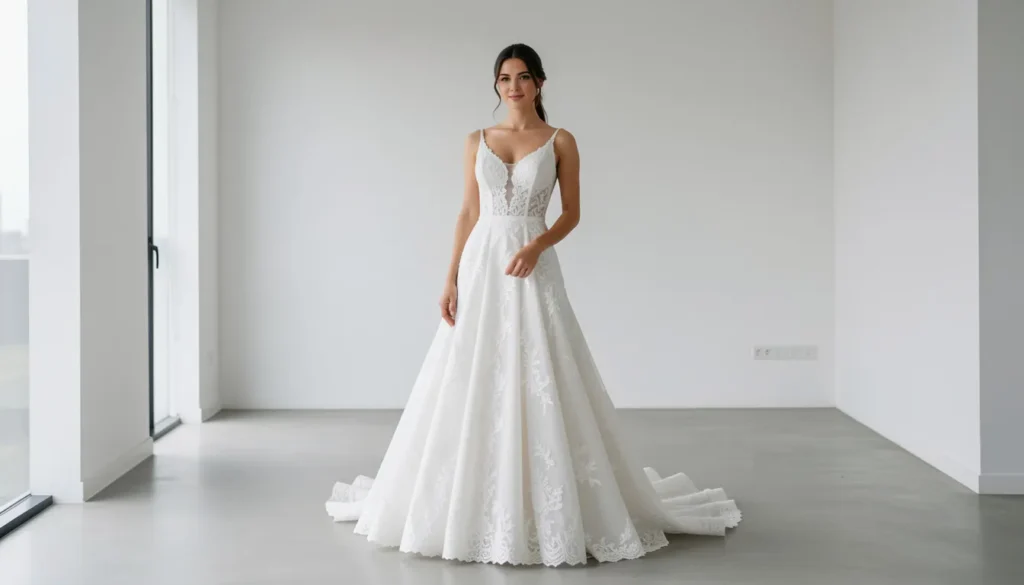
A sheath gown has a narrow shape that flows straight from the neckline to the hem. It follows the body’s natural line without flaring. This style suits slender, athletic, or petite brides and can make the frame look longer. It is elegant, minimalist, and ideal for beach or intimate weddings.
The Empire Waist Gown
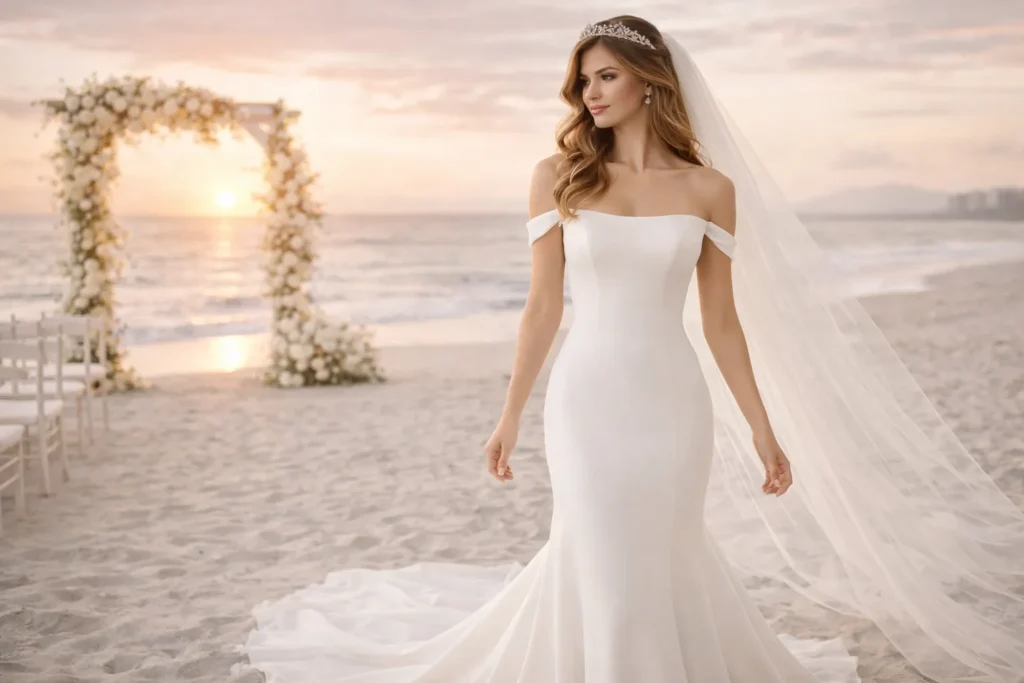
The empire waist gown has a high waistline just below the bust, with a skirt that flows loosely from that point. It works well for pear-shaped brides and is a popular, comfortable choice for pregnant brides. This style feels Grecian, bohemian, and romantic.
Exploring Necklines and Sleeve Styles
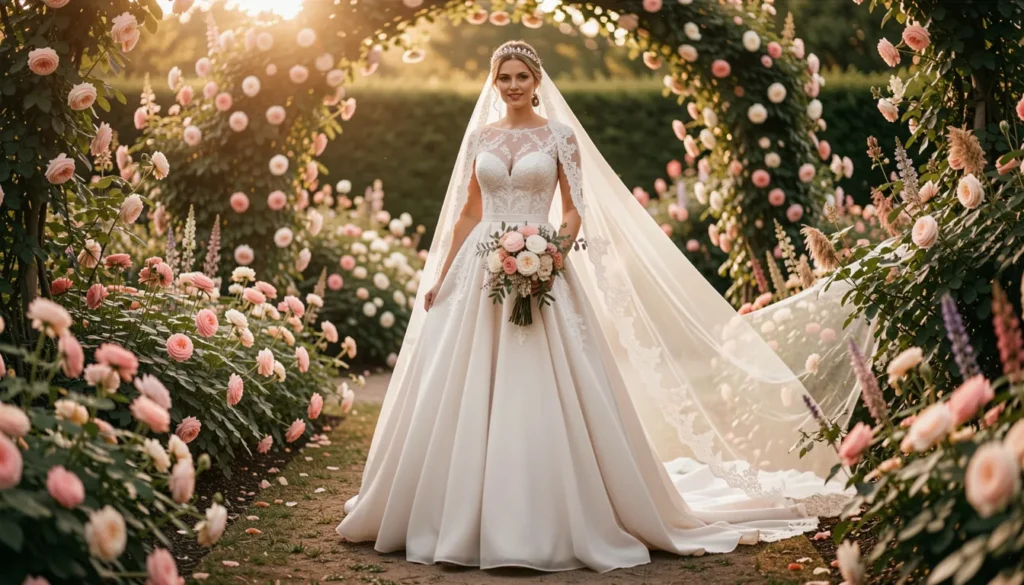
The neckline frames the face and affects jewelry and hairstyles.
Popular Necklines
- Sweetheart: Heart-shaped, accentuates the bust, and is romantic.
- V-Neck: Dips down in a “V” shape, elongates the torso, can be modest or plunging.
- Off-the-Shoulder: Sits below the shoulders, highlighting the collarbone, very elegant.
- Halter: Wraps around the neck, showing shoulders and back.
- Bateau (Boat Neck): Wide neckline from shoulder to shoulder, classic and sophisticated.
Sleeve Options
- Sleeveless/Strapless: The most common choice.
- Cap Sleeves: Small sleeves sitting on the shoulder, adding light coverage.
- Long Sleeves: Often made of lace or sheer fabric, can look elegant, modest, or bohemian.
- Flutter Sleeves: Loose, flowing short sleeves that add a soft, romantic touch.
Choosing the Right Wedding Dress Fabric
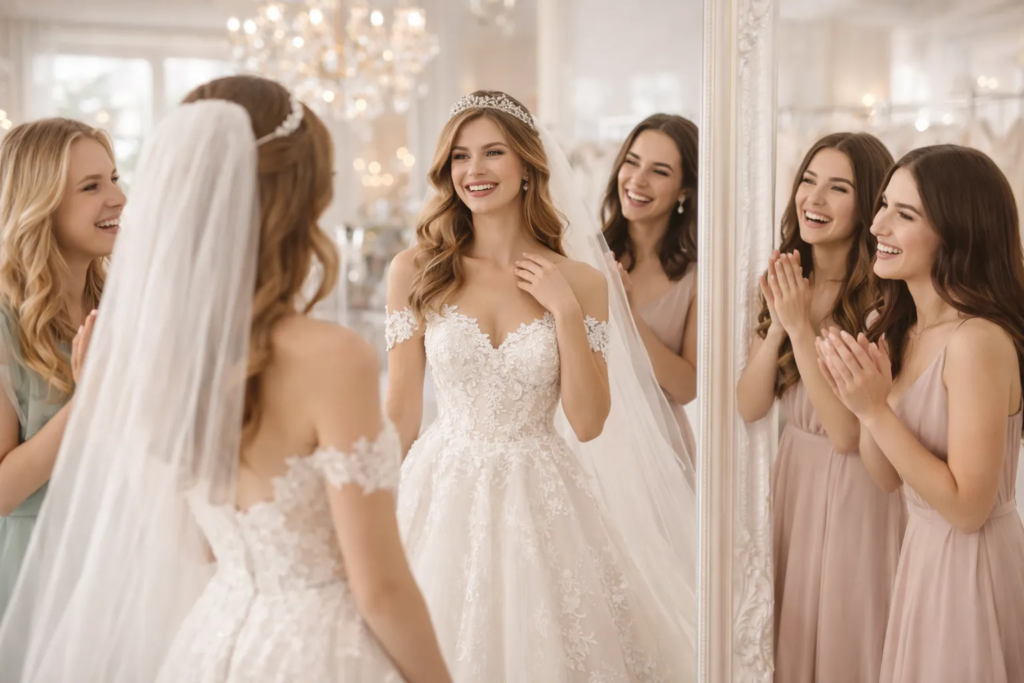
Fabric affects the dress’s look, feel, and structure.
- Lace: Traditional and romantic, used as an overlay or full dress. Types include Alençon (floral patterns), Chantilly (soft and delicate), and Venetian (heavier and sculptural).
- Satin: Heavy and smooth with a shine, good for structured gowns like ball gowns and A-lines, formal and classic.
- Tulle: Lightweight netting for full skirts, giving a dreamy, ethereal look.
- Organza: Crisp but flowing, holds shape for layered skirts and ruffles.
- Chiffon: Sheer and light, drapes beautifully, good for empire or sheath gowns, ideal for summer weddings.
- Crepe: Smooth and lightweight, drapes over the body, perfect for minimalist sheath or trumpet dresses.
- Mikado: Heavier silk with shine, good for structured, architectural designs.
The Bridal Gown Shopping Experience: Tips for Success
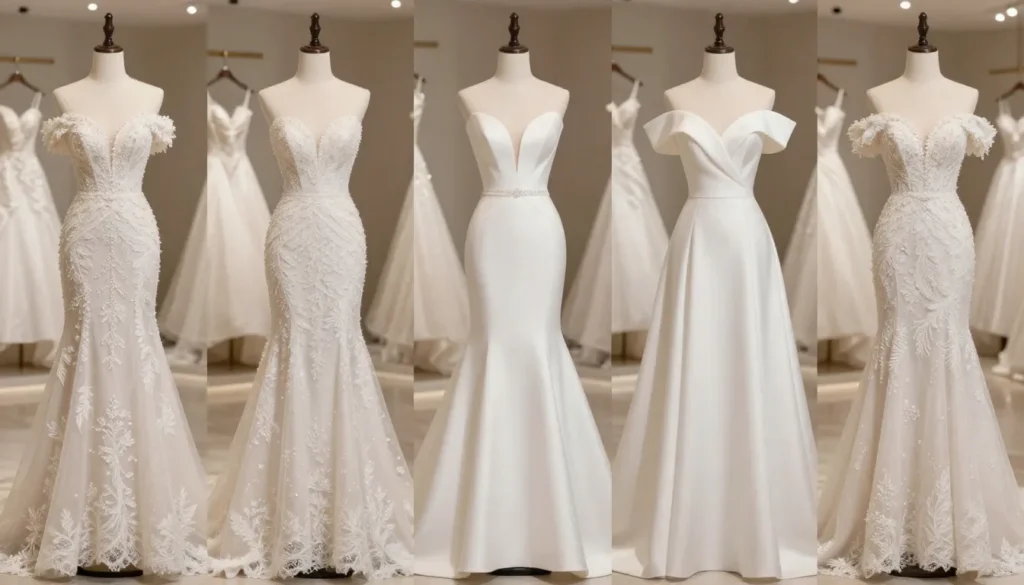
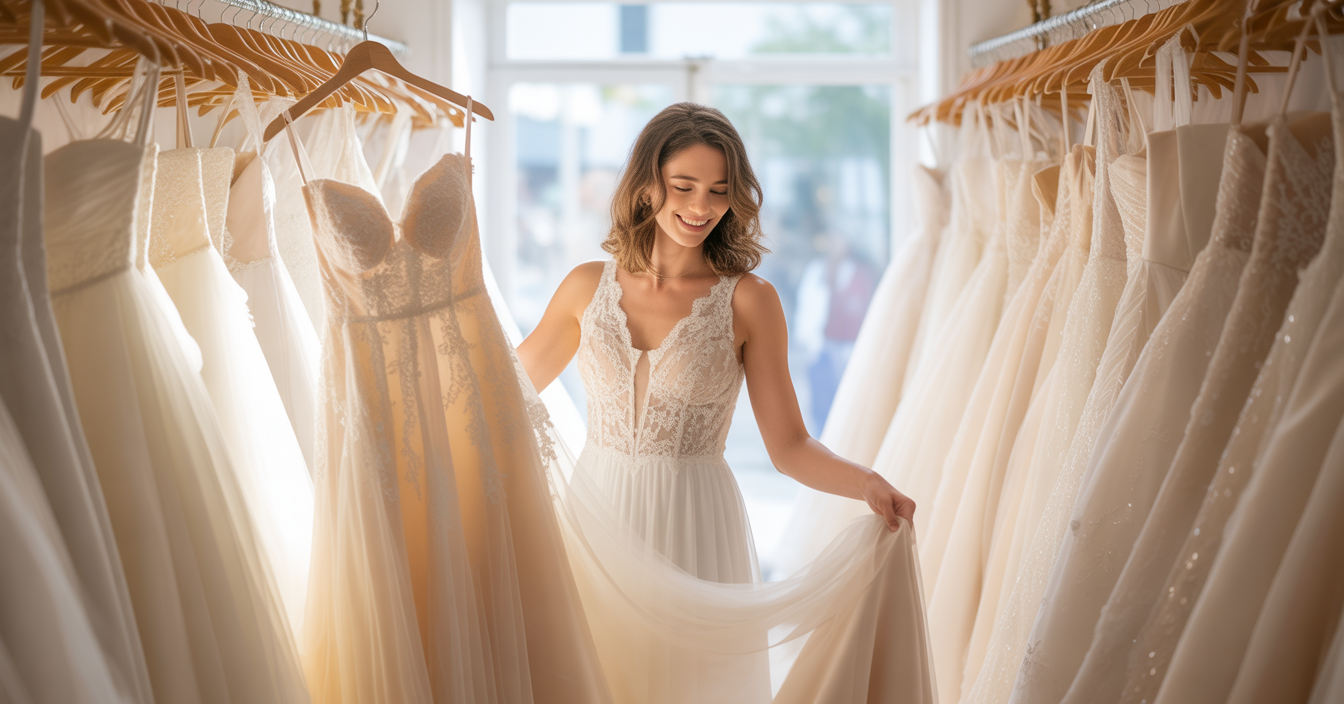
Shopping for a wedding dress should be joyful, not stressful.
- Start Your Search Early: Most gowns are made to order and take 6-9 months, plus time for alterations. Begin 9-12 months before your wedding.
- Set a Realistic Budget: Include the gown, alterations, veil, and accessories. Be honest with your consultant about your budget.
- Do Your Research, but Keep an Open Mind: Save styles you like, but try dresses you might not expect to love. Many brides find their perfect gown this way.
- Choose Your Shopping Crew Wisely: Bring a small group of supportive family or friends. Too many opinions can be confusing.
- Trust Your Consultant: Consultants know their inventory and what suits different body types. Let them guide you.
Conclusion
Finding your dream wedding dress is personal and emotional. The perfect gown is not just about trends or popular shapes; it is about finding the dress that makes you feel your best. Whether you imagine a grand ball gown or a modern sheath, the right dress is waiting. Take your time, enjoy the experience, and trust your instincts. The dress that makes you smile and feel excited for your wedding day is the one.
Frequently Asked Questions (FAQs)
Q1: What should I wear to my bridal appointment?
Wear nude, seamless underwear and a strapless bra. Avoid heavy makeup that could rub off on the dresses.
Q2: How many dresses should I try on in one appointment?
Try 5 to 10 gowns. More can cause “dress blindness,” where all dresses start to look the same.
Q3: What’s the difference between white, ivory, and champagne?
White is bright and crisp. Ivory is slightly creamy. Champagne has soft pink or gold tones. Always see the colors in person.
Q4: How much should I budget for alterations?
Alterations usually cost 10-15% of the dress price, depending on the complexity of the changes.
Q5: Can I buy a bridal gown online?
It is possible, but in-person shopping is recommended. Sizing can be tricky and the quality may not match expectations. Seeing the dress in person with a consultant is best.