Perfect Interview Outfit for Women: Professional First Impressions
Getting ready for an interview takes time and effort. You prepare your resume, learn about the company, and practice your answers. But one big question always comes up before the day arrives: what should you wear? Choosing the right interview outfit for women is very important. It is the first thing the interviewer sees when you walk in. Before you even speak, your clothes already say something about you.
Your outfit shows if you are serious about the job. It shows if you respect the company and understand its work culture. Even though your skills and experience matter the most, people form opinions very quickly. Wearing the right outfit can also help you feel more confident. When you are comfortable and well dressed, you can focus on answering questions instead of worrying about your clothes.
Why Your Interview Outfit Matters
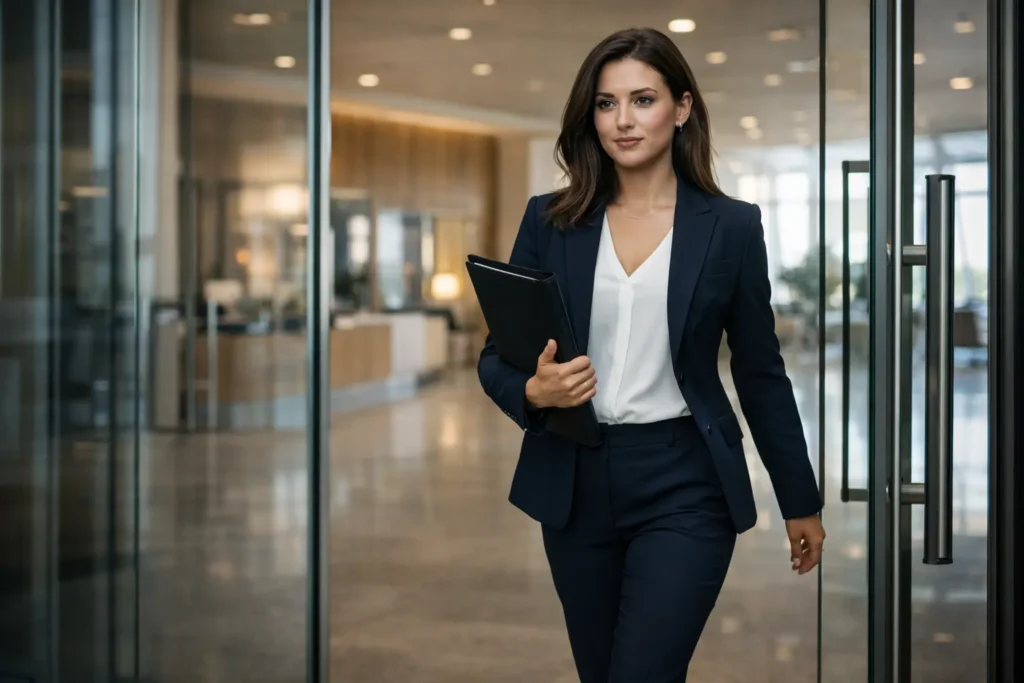
In a perfect world, people would judge us only by our talent. But in real life, how you present yourself matters. Clothing is a way of silent communication. It tells others how you see yourself and how seriously you take the opportunity.
The Psychology of First Impressions
People often form opinions within the first few seconds of meeting someone. Your outfit sends a message right away. It shows that you respect the interview and the person meeting you. It also shows that you understand the company’s style. For example, wearing jeans to a formal office can make it seem like you did not prepare. On the other hand, wearing a very formal suit to a relaxed office may make you look out of place.
The Confidence Factor
The clothes you wear can change how you feel. When you dress in a clean, well-fitted, and professional outfit, you feel more ready and strong. You may stand straighter, speak more clearly, and feel more sure of yourself. This confidence can be noticed by the interviewer and can leave a good impression.
decoding the Dress Code: Interview Outfit for Women
Before choosing your clothes, you need to understand the company’s dress code. Different industries expect different styles. What is right for one office may not be right for another.
Business Professional (Corporate/Formal): Interview Outfit for Women

This is the most formal type of dress code. It is common in fields like finance, law, government, and high-level corporate jobs.
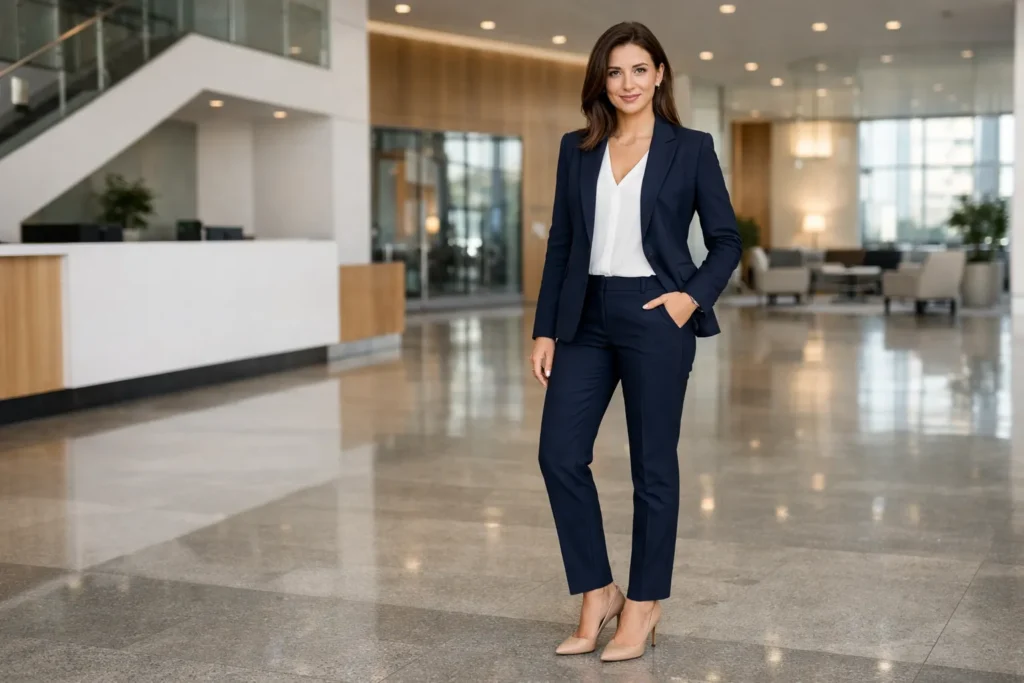
The overall look should be traditional and polished. A matching suit in navy, black, or grey works best. You can choose pants or a skirt. Pair it with a simple button-down shirt or a modest blouse. Closed-toe heels or neat loafers complete the look. Everything should look clean, fitted, and well put together.
Business Casual (General Office) Interview Outfit for Women
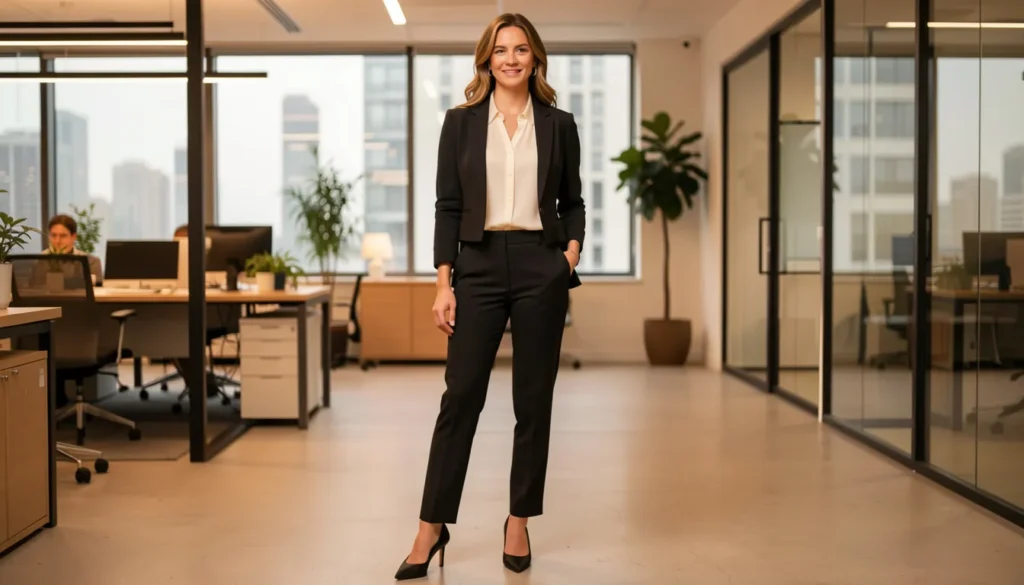
This dress code is common in many offices today, such as marketing, education, administration, and sales.
The style should still be professional but a little more relaxed. You can wear trousers or chinos instead of jeans. Knee-length skirts, blazers, cardigans, blouses, and simple dresses are good choices. You have more freedom to wear soft colors or light patterns, but your outfit should still look neat and serious.
Creative/Startup Casual
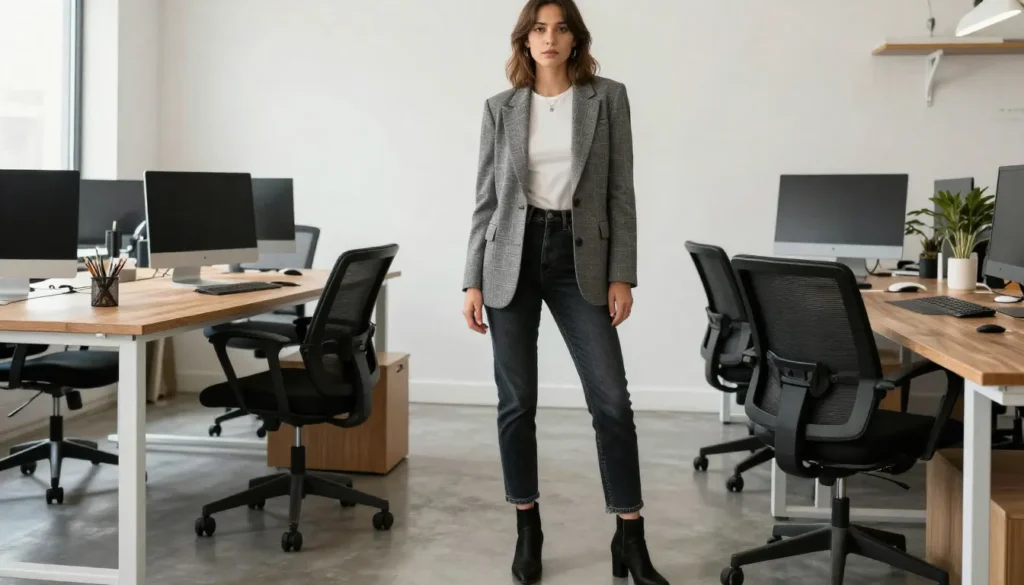
Some tech companies and creative workplaces have a more relaxed dress style. Even then, casual does not mean sloppy.
The look can be modern and smart. Dark jeans without holes may be acceptable. You can wear a stylish top, a jumpsuit, or a blazer over a simple shirt. Clean sneakers or boots may work if they look neat. The key is to look thoughtful and tidy, not too relaxed.
Essential Wardrobe Staples for Interviews

You do not need a huge wardrobe for interviews. A few good-quality pieces can help you create many outfits. It is better to have simple clothes that fit well than many items that do not look polished.
The Power Suit
A well-fitted suit is a strong choice for interviews. It can last for years and can be worn in different ways. You can wear the blazer and pants together or separately.
The fit is very important. The shoulders should sit correctly, and the length should match your height. A simple suit that fits well looks better than an expensive one that does not fit properly. Navy is often a great color because it looks calm and confident.
The Versatile Blazer
A blazer can quickly make any outfit look more professional. You can wear it over a dress, with a skirt, or with trousers.
Choose fabric that does not wrinkle easily. A classic style is usually the safest choice. Very trendy cuts may not work unless you are interviewing in a fashion-related job.
The Perfect Blouse
Your top should be comfortable and modest. Avoid very low necklines. Simple shapes like crew neck or collared shirts are safe options.
Choose fabrics that are not see-through. If the material is light, wear a layer underneath. The blouse should look smooth and neat.
Trousers and Skirts
Straight-leg trousers or slightly wide styles look professional and suit most body types. Ankle-length pants can also look modern and neat.
For skirts, pencil and A-line styles are both good choices. The length should not be too short. A safe rule is that it should not be more than two inches above the knee when standing.
The Dress
A structured dress can be an easy option. Sheath and wrap dresses work well for interviews.
Choose a fabric that holds its shape. If the dress has no sleeves, it is usually better to wear a blazer or cardigan on top to keep the look professional.
Choosing the Right Shoes and Accessories
Shoes and accessories should support your outfit, not distract from it. Keep everything simple and clean.
Footwear Fundamentals
You do not need very high heels. If you cannot walk comfortably, it will show. A simple pump with a small heel is a common choice.
Flats, loafers, or similar closed shoes are also fine. Make sure your shoes are clean and not damaged. Small details like this matter.
Jewelry and Bags
Wear simple jewelry. Small earrings, a light necklace, or a watch are enough. Avoid noisy bracelets that can distract during the interview.
Carry a structured bag or briefcase that can hold your resume and other papers without folding them. Avoid very small bags or overly casual styles.
Grooming and Personal Care
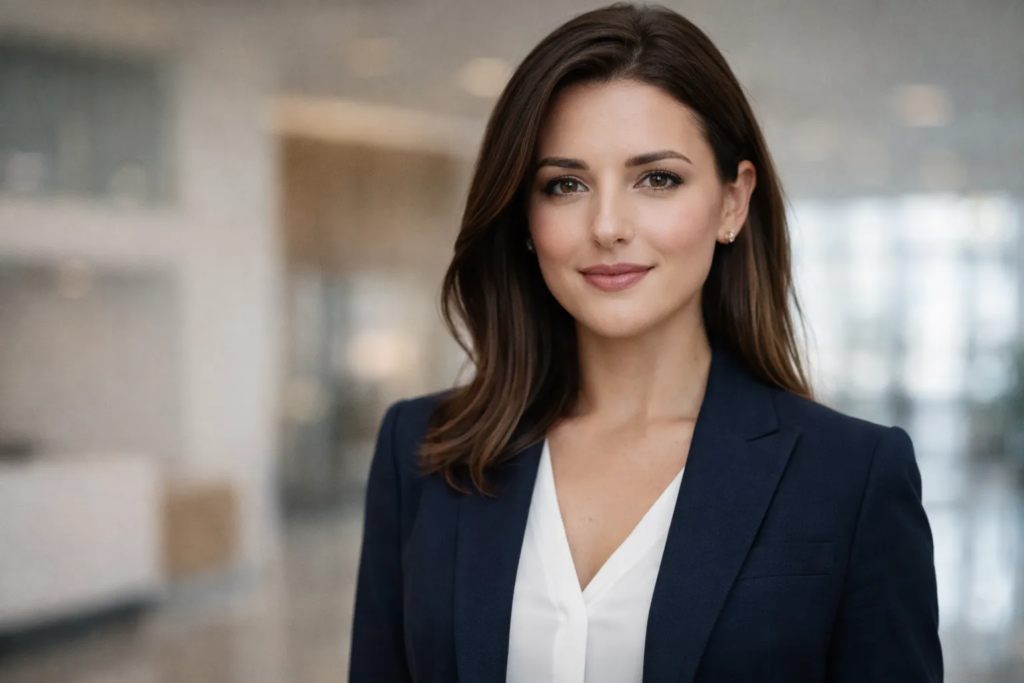
Your full appearance matters, not just your clothes. Clean and neat grooming is part of your interview outfit.
Hair and Makeup
Your hair should be clean and tidy. If you often touch your hair when nervous, tying it back can help.
Makeup should look natural. The goal is to look fresh and awake. Avoid very heavy or dramatic styles.
Nails and Scent
Your nails should be clean and trimmed. If you wear nail polish, choose simple or neutral shades. Avoid chipped polish.
Strong perfume can be distracting. It is better to skip it or use only a small amount. You want the interviewer to remember your skills, not your scent.
Seasonal Considerations

Weather can make planning harder, but you can still dress well in any season.
Summer Interviews
Choose light fabrics that allow air to pass through. Avoid materials that wrinkle easily. Light colors can work, but make sure they are not see-through.
Even if it is hot outside, offices may be cold inside. Bring a blazer in case you need it.
Winter Interviews
Your coat is also part of your look. A simple and classic coat looks more professional than a sporty jacket.
If there is snow or rain, you can wear boots while traveling. Change into your interview shoes before you check in.
Virtual Interview Outfits

Online interviews are now very common. The same basic rules still apply, but there are a few changes.
Waist-Up Focus
In virtual meetings, people mostly see the upper part of your body. Wear a solid color that looks good on camera. Avoid busy patterns that may look strange on screen.
The “Mullet” Outfit
It may feel easy to dress professionally only on top, but it is safer to wear a full outfit. If you need to stand up, you will still look prepared. Dressing fully can also help you feel more focused and serious.
Lighting and Background
Make sure your outfit stands out from your background. If your wall is white, avoid wearing a white shirt so you do not blend in.
Common Mistakes to Avoid
Avoid clothes that are too revealing, too tight, or too loose. Stay away from very casual items unless clearly allowed. Bright neon colors or very loud prints can distract the interviewer.
Make sure everything fits well. Even a simple outfit can look expensive if it fits properly. Clean, pressed clothing always looks better.
Conclusion:
Choosing the right interview outfit for women takes planning. It shows that you respect the job and understand professional behavior. When you learn about the company’s dress style and choose simple, well-fitted pieces, you create a strong first impression.
The main goal is to feel confident and comfortable. When you feel good in what you wear, you can focus on sharing your skills and personality. A thoughtful outfit helps you walk into the interview ready to succeed.
Frequently Asked Questions (FAQs)
Q1: Is it okay to wear a dress to an interview?
Yes, a structured dress can be a good choice. Make sure the neckline is modest and the length is around the knee or longer. Adding a blazer can make it look more professional.
Q2: Can I wear jeans to an interview if the company is casual?
In most cases, it is safer to dress slightly more formal than the daily office style. If employees wear jeans, you can choose trousers instead. In very relaxed workplaces, dark jeans without holes may be acceptable. If you are unsure, ask about the dress code.
Q3: What colors are best for an interview outfit?
Neutral colors are usually the safest choice. Navy, black, grey, and similar shades work well. Light colors for shirts are also good. Small touches of color are fine, but avoid very bright shades.
Q4: Do I have to wear heels?
No, heels are not required. Flats or loafers are acceptable as long as they look professional and clean.
Q5: What should I bring with me to the interview?
Carry a professional bag with extra copies of your resume, a notebook, and a pen. You can also bring a list of references. Keep your phone inside your bag and turned off during the interview.