Sweat, Stretch, and Style: The Best Pilates Outfits for Every Session
Pilates is a workout that requires focus, control, and smooth body movement. Over the past five years of practicing and guiding others in studio sessions, I have learned that the clothes you wear can make a big difference. The right Pilates outfits help your body move easily and keep you comfortable from the beginning of the class to the final stretch.
Good workout clothing is not only about looking stylish in the studio. It also helps with safety and performance. When you are doing slow movements, deep stretches, or strong core exercises, your clothing needs to move with you. If your clothes are tight in the wrong places or too loose, they can distract you and make it harder to keep proper form.
Many people feel confused when choosing what to wear for Pilates because there are so many options in the activewear market. Questions often come up about socks, shorts, fabrics, and the difference between mat and reformer workouts. This guide explains the most important clothing pieces, helpful fabric choices, and simple care tips so your workout clothes stay in good condition for a long time.
Why Your Choice of Activewear Matters for Pilates
Some people think they can wear any comfortable clothes for Pilates, such as an old t-shirt or loose sweatpants. While comfort is important, the wrong clothing can make certain movements difficult and can even affect your posture during the workout.
When your outfit supports your movements and keeps your body cool, you can focus more on the exercise instead of fixing your clothing. Over the years, I have noticed that students who wear proper Pilates outfits feel more confident and stay focused throughout the session.
Unrestricted Movement and Flexibility
Pilates exercises involve controlled stretching, bending, and core engagement. Your clothing should stretch in every direction so your body can move naturally. If the fabric is stiff or the waistband is too tight, it can limit your range of motion.
Clothes that stretch well allow you to complete every movement smoothly. Instead of pulling at your leggings or adjusting your shirt, you can concentrate fully on your breathing and muscle control.
Breathability and Moisture Control
Even though Pilates is not a high-impact workout, your body still produces heat and sweat during the session. Breathable fabrics help air move around your body, which keeps you from feeling too hot.
Moisture-wicking materials pull sweat away from your skin and help it dry faster. This keeps you comfortable throughout the class and prevents the heavy, damp feeling that some fabrics create during workouts.
The Importance of Form-Fitting Clothes
Proper body alignment is very important in Pilates. Your instructor needs to clearly see how your body moves during each exercise. If your clothing is too loose, it becomes difficult to check your posture.
Form-fitting outfits make it easier to see if your spine is straight, your core is engaged, and your body is positioned correctly. This helps you perform each exercise safely and avoid unnecessary strain.
Essential Components of Perfect Pilates Outfits
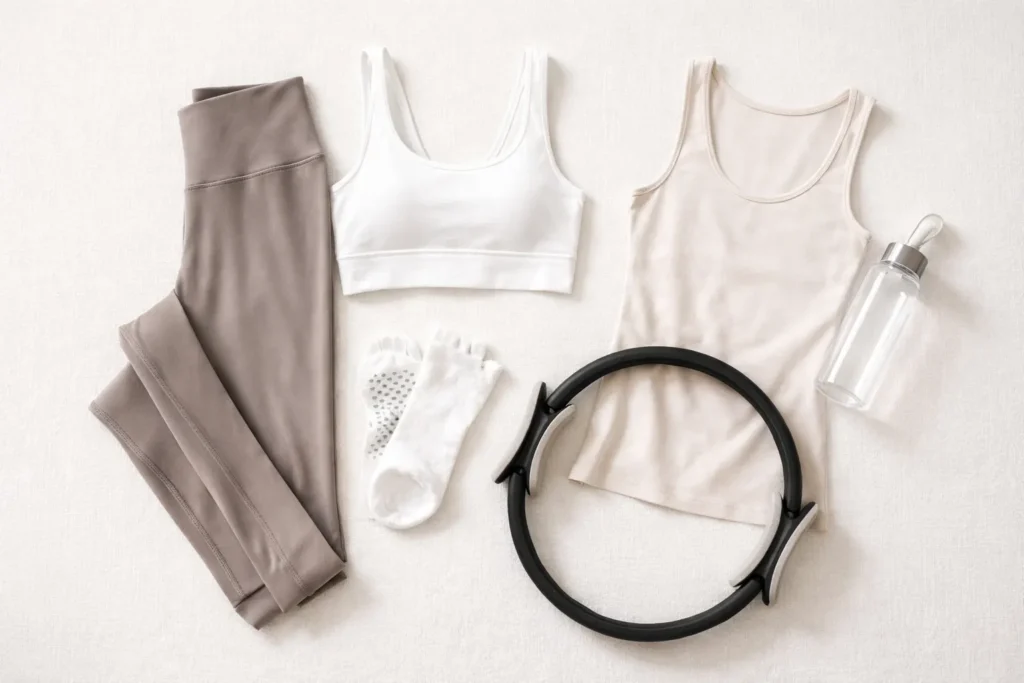
Building a good Pilates wardrobe does not require many pieces. From my experience in studios, a few high-quality basics are enough to create comfortable outfits for every class.
When you choose good leggings, supportive tops, and the right accessories, you can easily mix and match them for different sessions.
High-Waisted Leggings and Tights
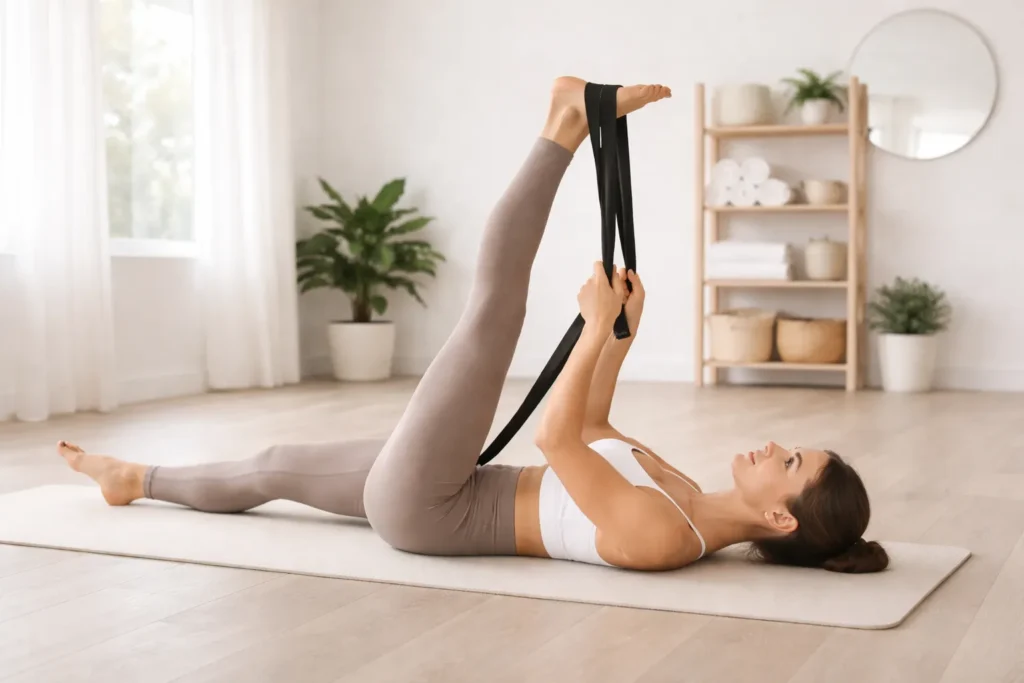
Leggings are one of the most common and practical clothing choices for Pilates. They provide coverage, flexibility, and support during many types of movements.
A high-waisted design is especially helpful because it stays in place when you bend, stretch, or roll on the mat. It also offers gentle support around the core area, which many people find comfortable during abdominal exercises.
The fabric should stretch both horizontally and vertically so your body can move freely. Seamless designs are also helpful because thick seams can press into your skin when you lie on your side or back. It is also better to avoid leggings with zippers or hard pieces on the back because they can feel uncomfortable during floor work.
Supportive Yet Comfortable Sports Bras
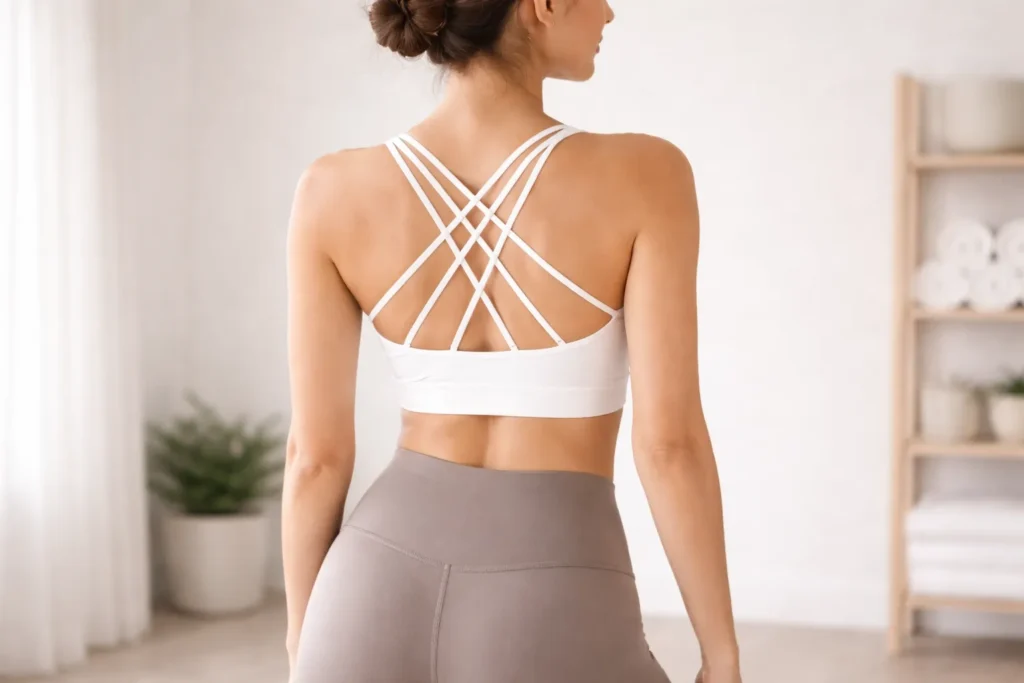
Pilates does not involve heavy jumping or running, so extremely structured sports bras are not always necessary. Most people prefer bras designed for low to medium impact activities.
Comfort and flexibility are the most important features. Strappy backs allow your shoulders to move naturally during arm and upper-body exercises. Soft bands around the ribcage also help because they do not restrict deep breathing.
Longline sports bras are also a popular option. They provide more coverage and can be worn like a crop top, which pairs well with high-waisted leggings.
Form-Fitting Tops and Tanks
Some people prefer wearing a tank top or fitted shirt instead of only a sports bra. When choosing a top for Pilates, the most important thing is that it stays in place during movement.
A fitted tank works well because it moves with your body without shifting around. Loose necklines can become uncomfortable when you bend or invert your body because the fabric may fall toward your face.
During colder months, a lightweight long-sleeve top can be a good option. It keeps your body warm without adding heavy layers that could limit movement.
Grip Socks: The Unsung Heroes
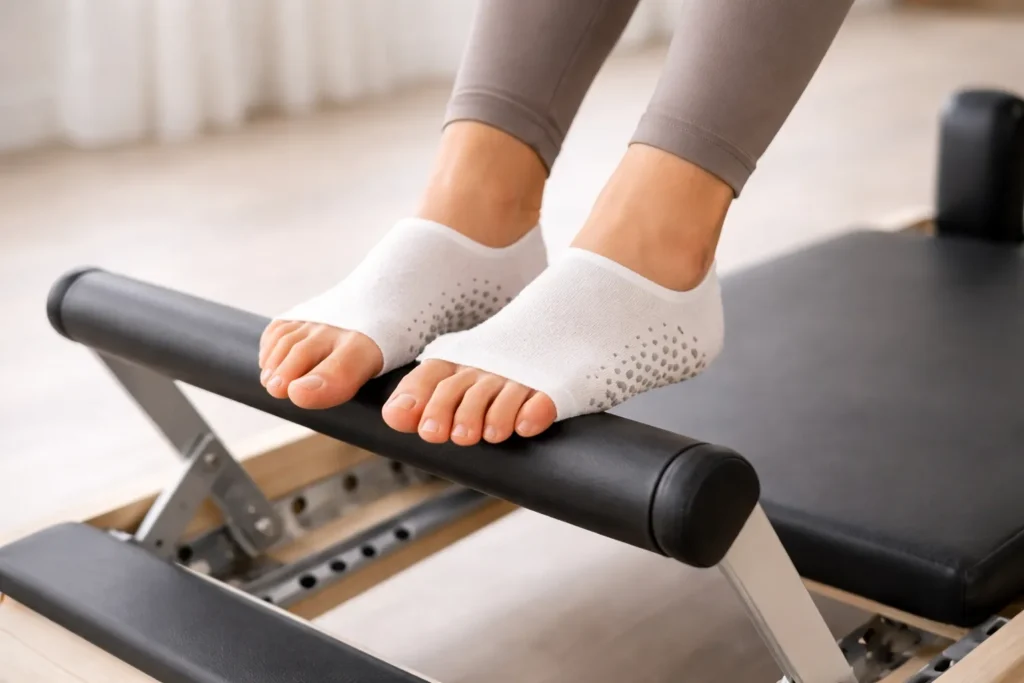
Grip socks are an important part of many Pilates outfits, especially in studios. These socks have small rubber grips on the bottom that help your feet stay stable on the mat or reformer equipment.
They help prevent slipping and give you better balance during exercises that require strong foot placement. Grip socks also support the small muscles in your feet, which can improve stability during standing movements.
Another benefit is hygiene. Studios often encourage or require them because they create a cleaner environment when many people use the same equipment. Grip socks come in many styles, including ankle, crew, and toeless designs.
Mat Pilates vs. Reformer Pilates: What to Wear
Pilates workouts can take place on a simple mat or on special equipment like a reformer. While the clothing basics remain similar, some small differences can make your workout more comfortable and safe.
Understanding these differences helps you choose the most suitable outfit for each type of class.
Outfits for Mat Pilates
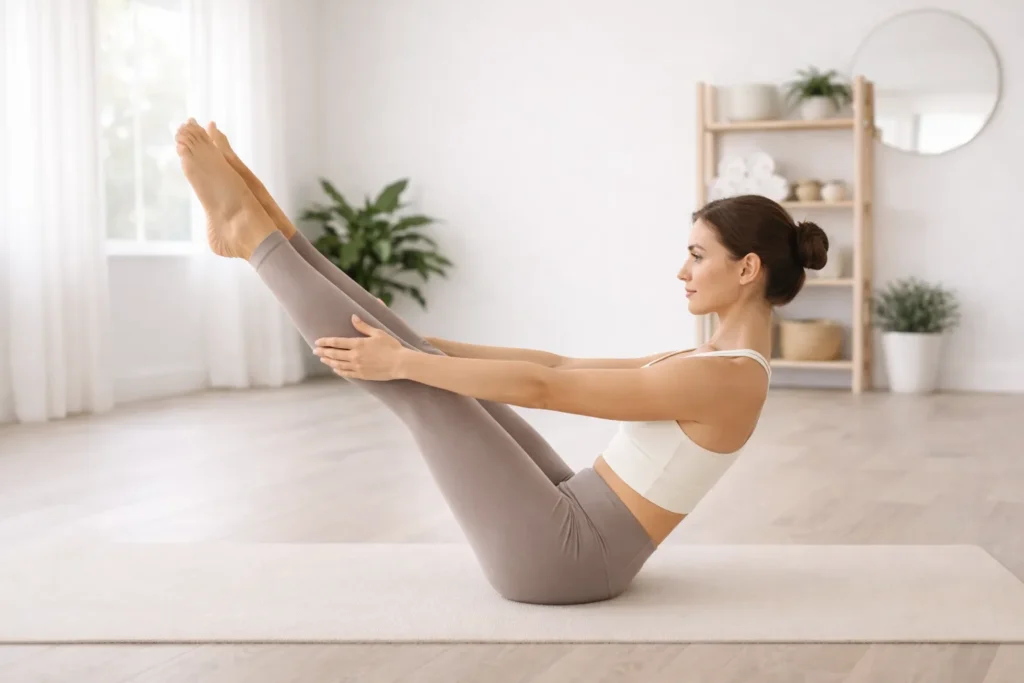
Mat Pilates exercises usually take place on the floor. You will spend much of the class lying on your back, stomach, or side while performing controlled movements.
Because your back touches the floor often, it is important to wear clothing without hard parts on the back. Zippers, buttons, or thick knots can feel uncomfortable when your spine presses against the mat.
Temperature can also affect comfort during mat sessions. Studio floors may feel cool at the start of class, so wearing a light layer such as a fitted wrap or cardigan can help you stay warm until your body heats up.
Outfits for Reformer Pilates
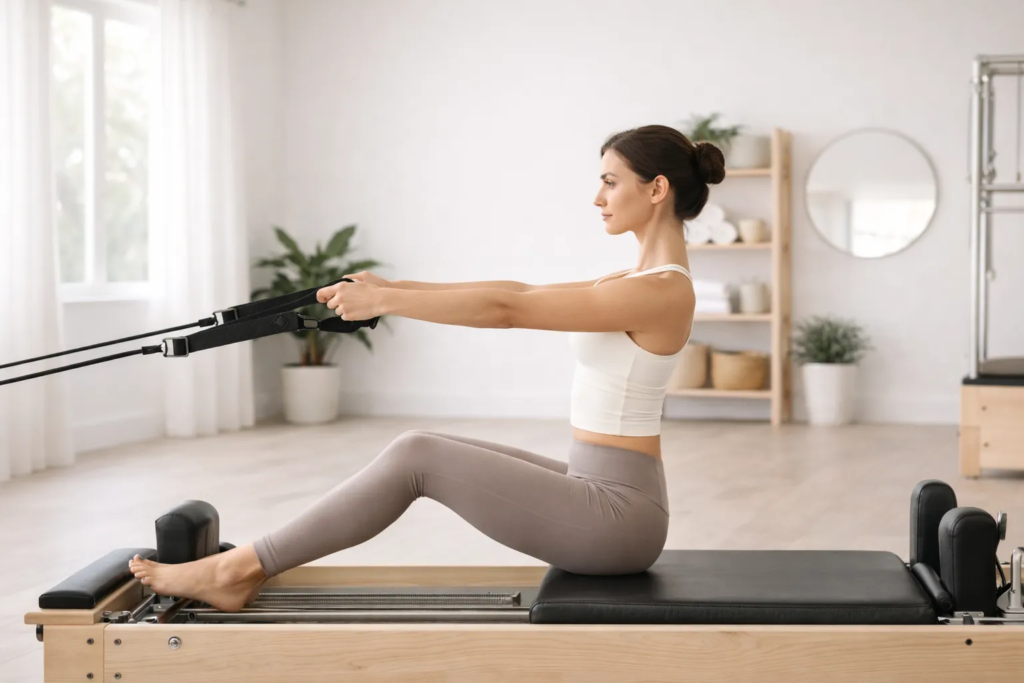
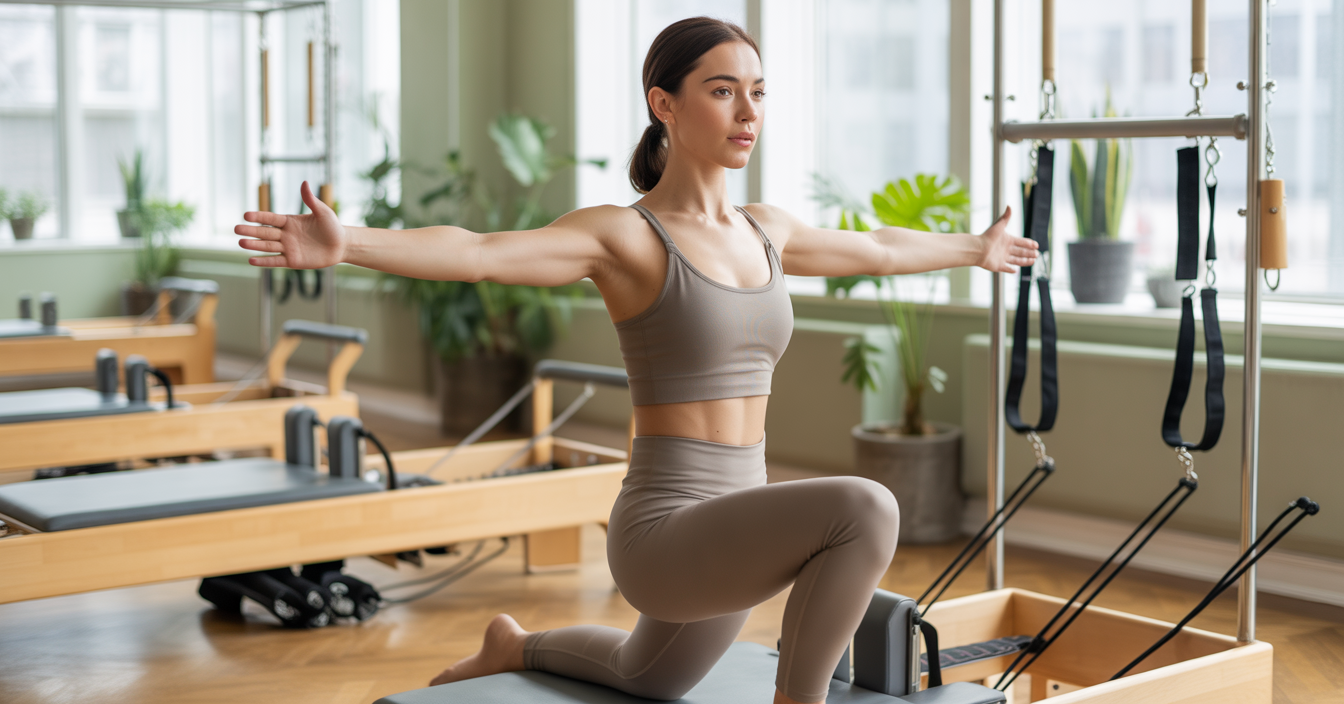
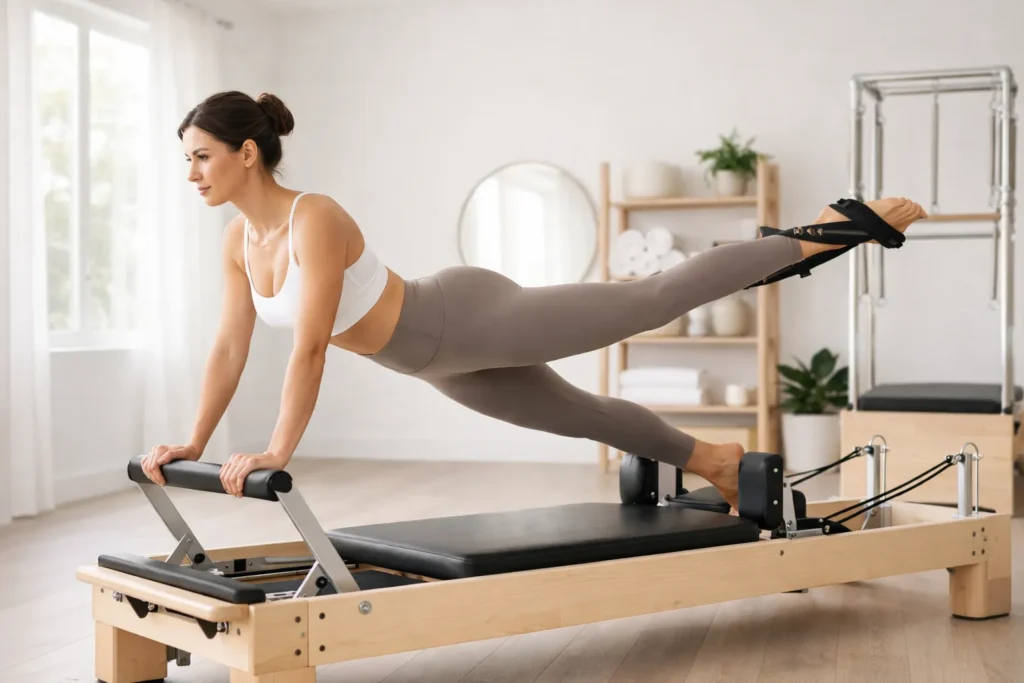
Reformer Pilates uses a machine that includes a sliding platform, springs, and straps. Because of the moving parts, clothing needs to be more fitted and secure.
Loose shorts, wide pants, or oversized shirts can get caught in the equipment, which can create safety issues. Wearing fitted leggings or capris helps prevent this problem.
Full leg coverage is also helpful because your legs may rub against straps and cables during certain exercises. Bare skin can sometimes become irritated, so leggings often feel more comfortable. Keeping your hair tied back is also important so it does not get caught in the machine.
Seasonal Pilates Wardrobe Guide
Your Pilates outfits may change depending on the season. Adjusting your clothing for warmer or colder weather helps you stay comfortable during each session.
A few simple changes in fabric weight and layering can make a big difference.
Summer Studio Sessions
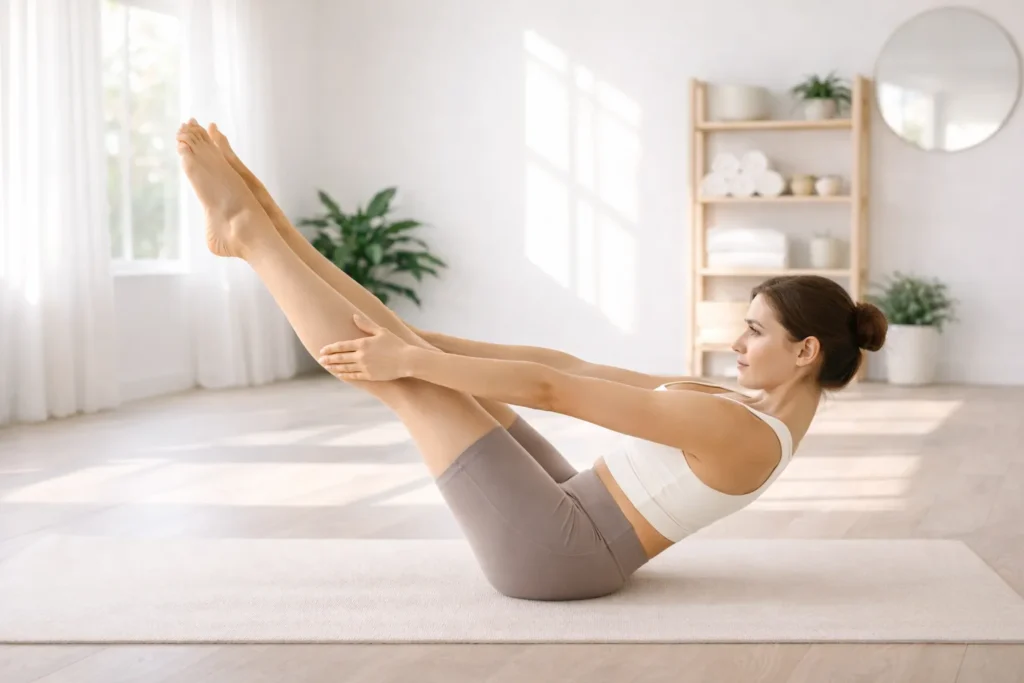
During hot weather, lightweight and breathable clothing becomes even more important. Fabrics that allow air to flow easily help your body stay cool while exercising.
Bike shorts are a popular summer option because they provide coverage without the extra warmth of full leggings. Many people also prefer crop tops or longline sports bras because they allow more airflow.
Light colors can create a fresh summer look, although darker colors are often better at hiding sweat. Choosing fabrics designed to manage moisture can help keep you comfortable during warmer sessions.
Winter Layering Done Right
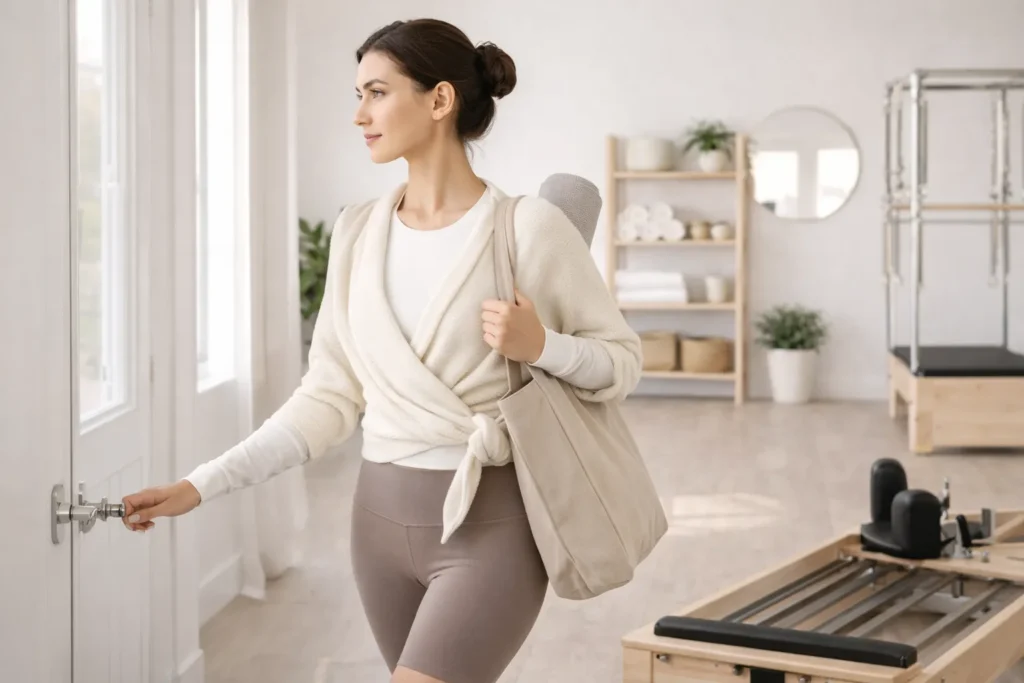
Cold weather requires a thoughtful layering approach. You want to stay warm on the way to the studio but still feel comfortable during the workout.
A simple base layer such as leggings and a fitted tank works well during exercise. Over this, a long-sleeve athletic top can add warmth without making you feel restricted.
For traveling to and from the studio, many people add an outer layer like a wrap sweater, bomber jacket, or zip-up fleece. Accessories like longer grip socks or leg warmers can also help keep your legs warm during colder months.
Fabrics to Look For (and Avoid)
The material used in activewear affects how the clothing performs during exercise. Checking the fabric label before buying workout clothes can help you choose pieces that support movement and comfort.
Some fabrics work very well for Pilates, while others are better left for everyday wear.
Best Fabrics for Pilates
Nylon and spandex blends are one of the most common choices for activewear. Nylon is soft and durable, while spandex provides the stretch needed for smooth movement.
Bamboo fabrics are also becoming more popular because they feel soft on the skin and allow air to circulate easily. They are known for being breathable and comfortable during workouts.
Polyester is another widely used material in athletic clothing. High-quality polyester is lightweight, strong, and good at moving sweat away from the body.
Fabrics to Leave in the Closet
Some fabrics do not perform well during workouts. One example is 100 percent cotton. While cotton feels soft, it absorbs sweat and stays wet for a long time, which can make clothing feel heavy and uncomfortable.
Heavy fleece is also not suitable for exercise because it traps heat and can cause you to overheat quickly. Fabrics that do not contain stretch materials like spandex can also limit your movement and may not hold their shape during active sessions.
Styling Your Pilates Look Beyond the Studio
Pilates clothing is no longer only for workouts. Many people enjoy wearing their activewear outside the studio as part of their daily style.
This trend allows you to move easily from a workout session to errands or casual outings without changing your entire outfit.
The Studio to Street Aesthetic
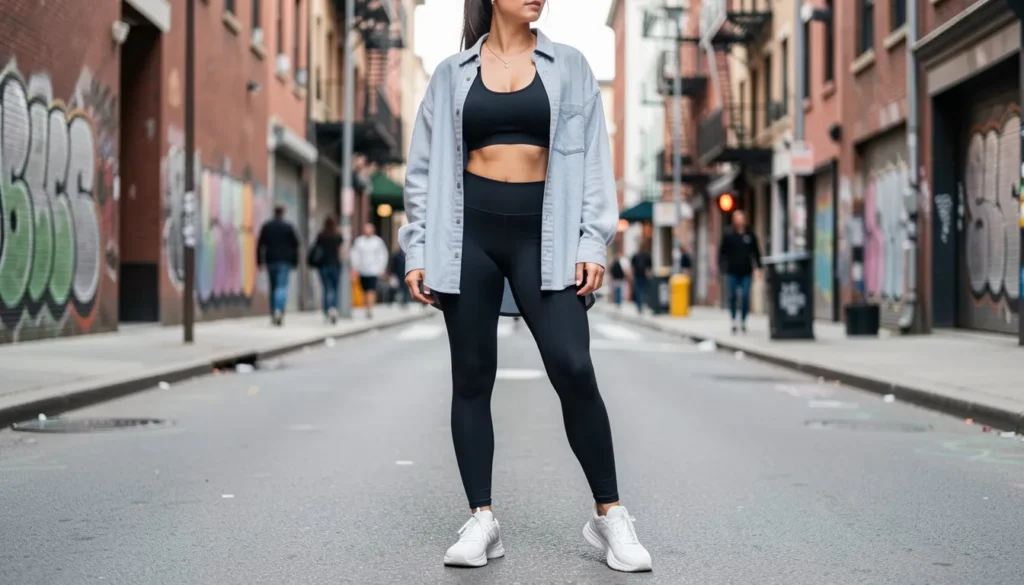
Turning a workout outfit into an everyday look often depends on how you layer and accessorize it.
Adding an oversized shirt or a comfortable cardigan over leggings and a sports bra can instantly create a relaxed and stylish appearance. Changing your footwear also makes a difference. Replacing grip socks with simple white sneakers or slip-on shoes can make the outfit feel more casual.
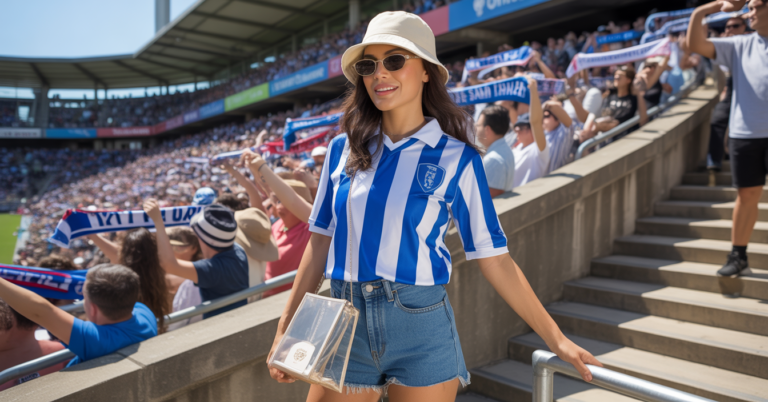
Accessories like a tote bag, baseball cap, or sunglasses can also help create a polished look while still keeping the comfort of activewear.
Color Coordination and Matching Sets
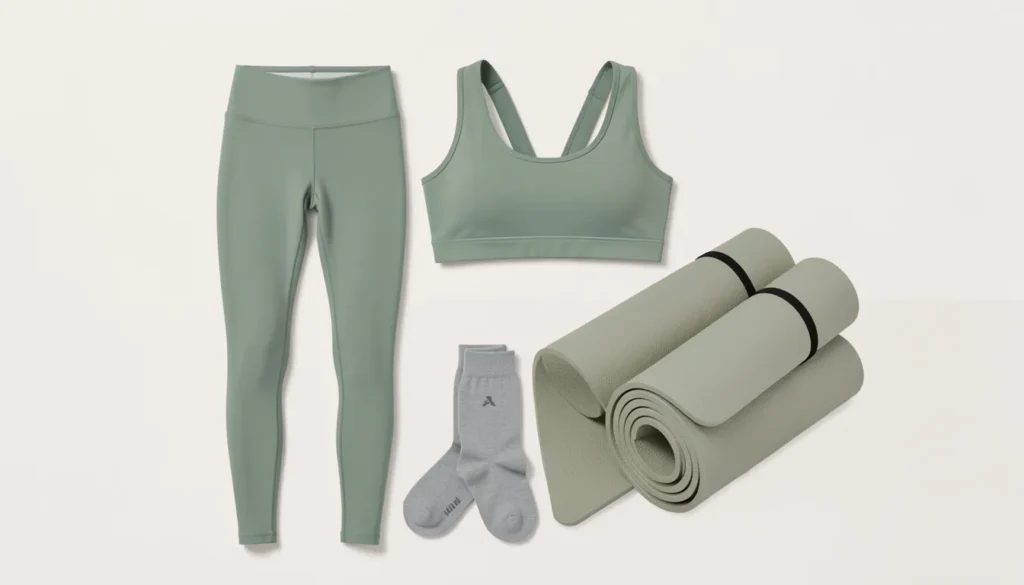
Matching sets have become very popular in workout fashion. Wearing the same color for both the top and bottom creates a clean and balanced appearance.
Monochromatic outfits can make the body look longer and more streamlined. Many people enjoy colors such as soft greens, warm earth tones, or neutral greys.
Black is also a classic choice because it works with almost any outer layer and hides sweat well. Mixing textures within the same color, such as pairing smooth leggings with a ribbed top, can add visual interest to the outfit.
How to Care for Your Pilates Wardrobe
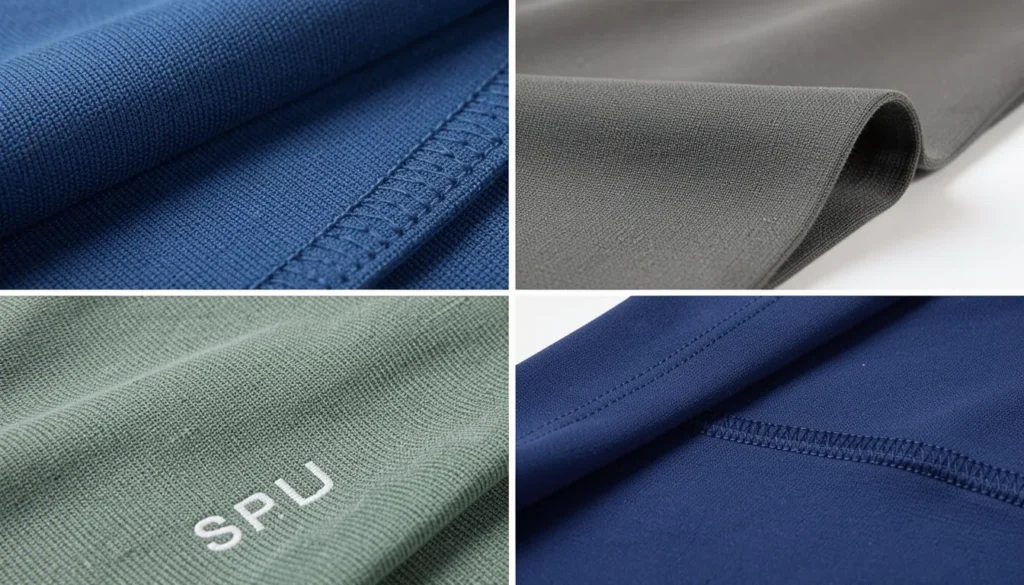
Activewear is often made from delicate stretch fabrics, so proper care is important if you want your clothes to last a long time.
With the right washing and drying habits, your leggings and tops can stay comfortable, supportive, and fresh.
Washing your workout clothes in cold water helps protect the elastic fibers that give them their stretch. Hot water can slowly weaken these fibers and cause the clothing to lose its shape.
Fabric softeners should usually be avoided because they leave a coating on synthetic fabrics. This coating can trap odors and reduce the fabric’s ability to manage sweat.
Using a mild detergent designed for sports clothing can help remove sweat and bacteria without damaging the material. Air drying is also recommended because the strong heat from dryers can weaken the fabric. Turning garments inside out before washing can also protect the outer surface from friction.
Conclusion
Choosing the right Pilates outfits can greatly improve your workout experience. When your clothing fits well, stretches easily, and keeps you cool, it becomes much easier to stay focused on your breathing and movement.
After years of regular practice, I have found that simple pieces like supportive leggings, comfortable tops, and reliable grip socks make every session smoother and more enjoyable. Paying attention to fabric quality and choosing form-fitting designs also helps keep movements safe and controlled.
By selecting the right clothing for both mat and reformer workouts, and by caring for your activewear properly, you can build a Pilates wardrobe that supports you in every class.
Frequently Asked Questions (FAQs)
Q1: Do I need to wear shoes for Pilates?
Pilates is usually practiced without athletic shoes. Most people either go barefoot or wear grip socks. Grip socks are helpful because they prevent slipping and provide better stability on the mat or equipment.
Q2: Can I wear loose clothing to a Pilates class?
Loose clothing is generally not recommended for Pilates classes. Baggy shirts may fall toward your face during certain movements, and wide pants can get caught in reformer equipment. Fitted clothing allows safer movement and helps instructors check your posture.
Q3: What is the difference between yoga and Pilates outfits?
Many yoga and Pilates outfits look similar, and the same clothing can often be used for both. However, some yoga styles allow looser clothing, while Pilates—especially reformer sessions—usually requires more form-fitting garments for safety and clear body alignment.
Q4: Are grip socks mandatory?
The need for grip socks depends on the studio’s rules, but many reformer studios require them. They improve grip on equipment and help maintain cleanliness when multiple people share the same space.